Sauna or ice first? Four rules that actually decide the order
The research does not settle the sequence. What you did that morning, and what you need for the next three hours, does.
OTTAVA Editorial · Published 24 August 2026 · 4 min read
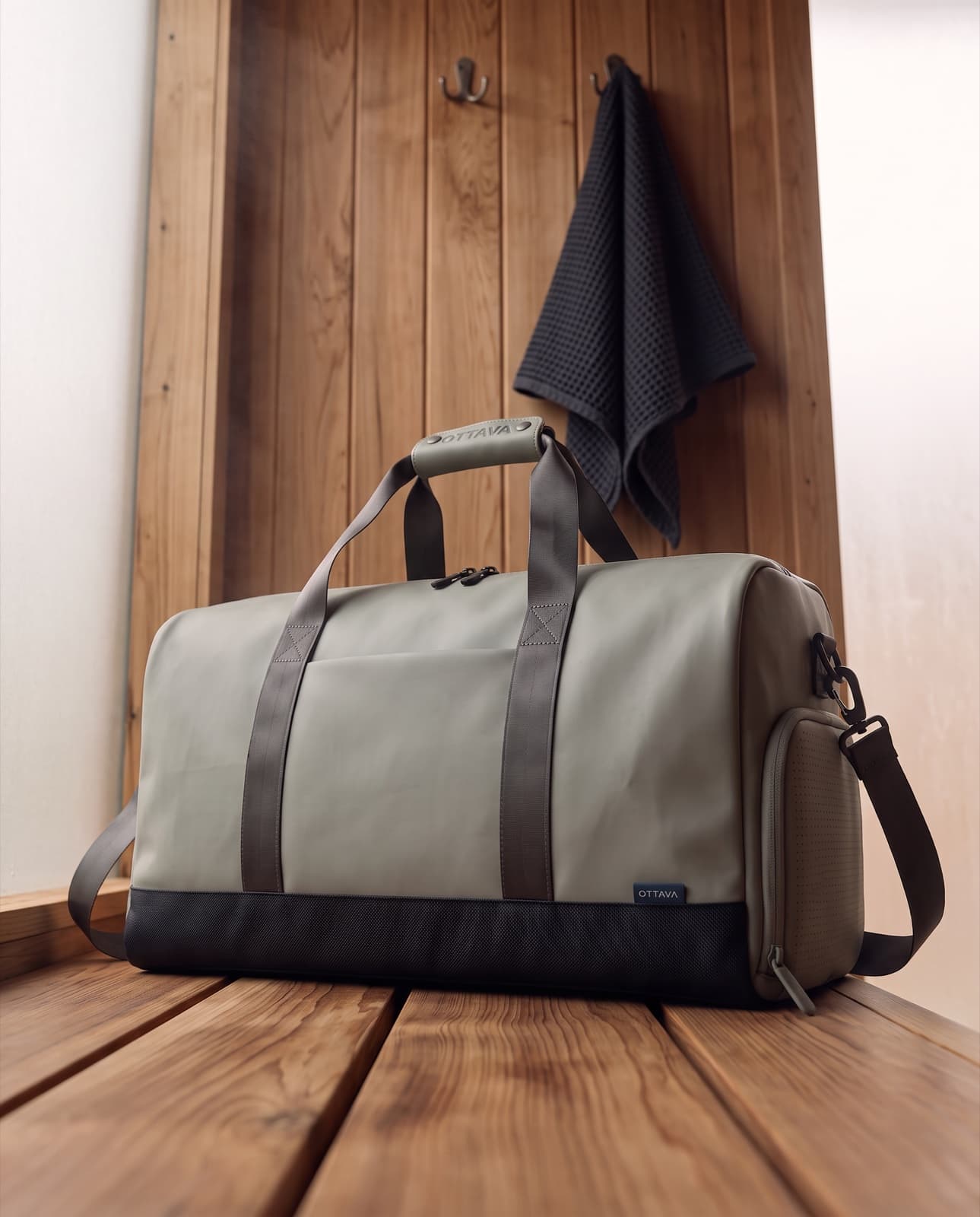
Every bathhouse sells the pair, and everyone in it has a confident opinion about the order. The honest answer starts with a disappointment: the research does not settle it, because the research has mostly not asked.
What has been studied is contrast water therapy — alternating hot and cold immersion. Two useful findings from that literature. First, contrast therapy beats passive rest: a 2013 meta-analysis in PLOS One found significantly better outcomes for muscle soreness and strength loss at 6, 24, 48, 72 and 96 hours against passive recovery. Second, it does not beat the alternatives: reviewing contrast therapy against cold immersion, warm immersion, compression, active recovery and stretching, the same body of work found little evidence for a superior intervention. A 2016 systematic review of team-sport recovery reached the same conclusion.
So contrast works, and so does everything else in that family, and nobody has demonstrated that the sequence is the active ingredient.
That does not make the order arbitrary. It means you should choose it on grounds other than a performance claim — on what you did that day, and on what you need for the next few hours.
Four rules that actually decide it
1. If you lifted for size or strength today, finish warm. Cold immersion immediately after resistance training modestly blunts hypertrophic adaptation. If you are going to be in a cold plunge on a lifting day anyway, put it early in the session and end in the heat, or leave four to six hours between the session and the cold. The ice bath piece has the effect sizes.
2. If you want to be alert afterwards, finish cold. Ending on cold leaves you vasoconstricted, awake and slightly wired. This is the correct order for a lunchtime session before an afternoon of work, and it is the traditional Finnish pattern for a reason.
3. If you are going to sleep soon, finish warm. Sleep onset follows a falling core temperature, and passive warming an hour or two before bed is one of the better-supported non-drug sleep interventions. Ending a session cold and going straight to bed works against that in principle, and against the general observation that a cold plunge at 21:00 is a stimulant.
4. If you are very sore and racing again tomorrow, cold matters more than order. Get the cold dose right — 10 to 15 minutes at 5 to 10°C for muscle damage markers, or 11 to 15°C for soreness — and treat the sauna as the pleasant part.
A sequence that works for most people
For a general session with no strong constraint:
| Round | What | Duration |
|---|---|---|
| 1 | Sauna | 12–15 min |
| 2 | Cold plunge | 1–3 min |
| 3 | Rest, dressed or wrapped, drink water | 5–10 min |
| 4 | Sauna | 12–15 min |
| 5 | Cold plunge | 1–3 min |
| 6 | Rest | 5–10 min |
| 7 | Sauna, optional third round | 10–15 min |
| End | Cold, or warm — decide by rules 1 to 3 | — |
The rest round between cycles is the part people skip and the part that makes the session pleasant rather than gruelling. It is also where the social element of a good bathhouse lives, which is not a physiological argument but is probably why people keep going back.
Note that the classic contrast-therapy protocols in the literature use hot and cold water immersion, often at ratios around three or four minutes hot to one minute cold, repeated three or four times. A dry sauna at 85°C and a plunge at 5°C is a different exposure with a different heat-transfer profile. Do not assume the immersion protocols transfer precisely.
Things worth not doing
Do not plunge until you are shivering, then go back into the heat repeatedly. Core temperature keeps falling after you leave cold water. Stacking heat on top of an afterdrop makes the session harder to read and the risk higher.
Do not do either after drinking. Alcohol plus vasodilation plus heat, or alcohol plus cold shock, are both genuinely dangerous combinations rather than cautious-label combinations.
Do not do the first cold round alone if you are new to it. The cold shock response — the gasp, the hyperventilation, the heart-rate spike — is at its worst in the first 30 to 60 seconds and in your first few exposures.
Take advice first if you are pregnant or have a cardiac condition or uncontrolled hypertension. Both heat and cold raise cardiac workload, and contrast raises it repeatedly.
What to bring
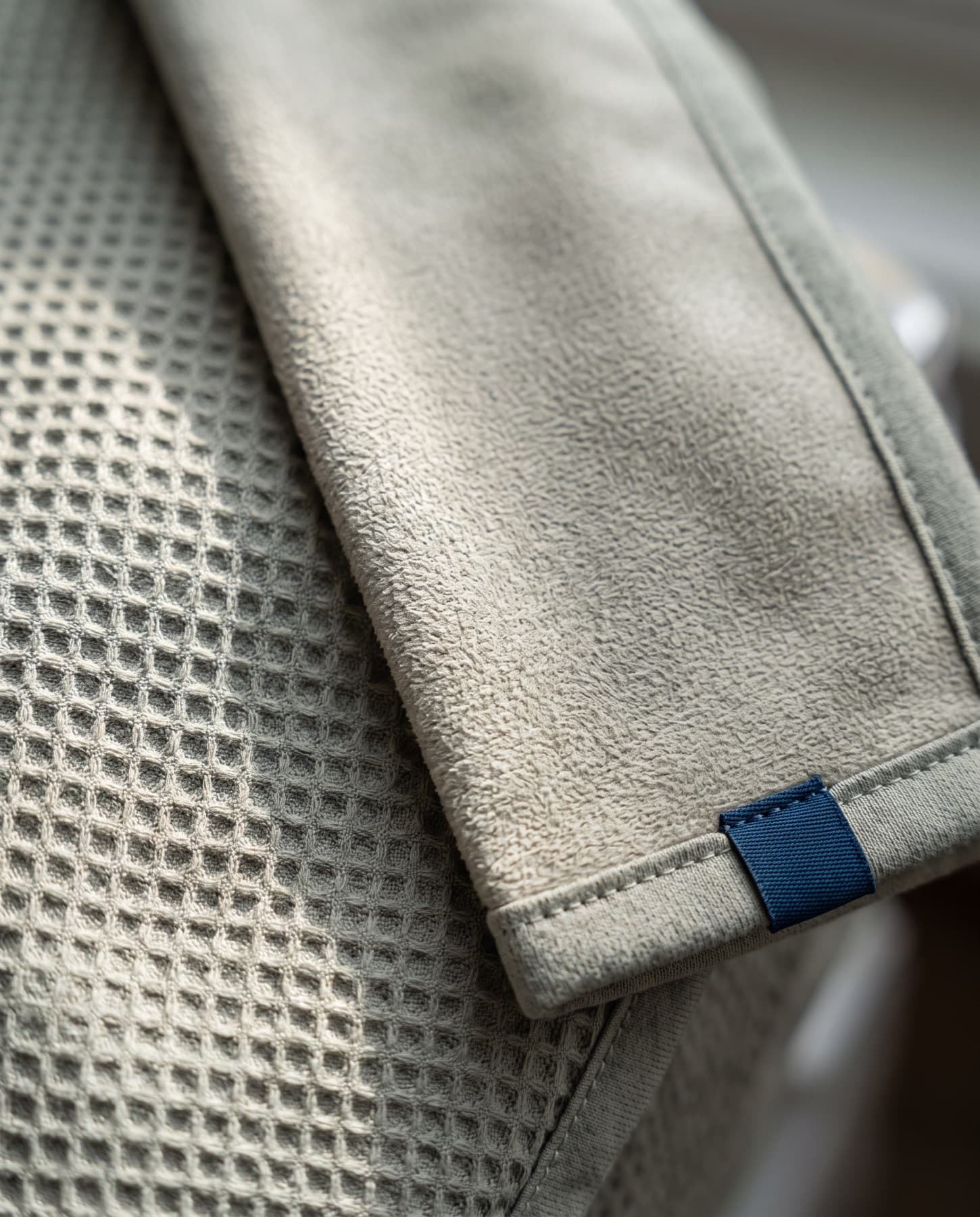
Two towels: one that gets soaked, one that stays dry. Slides. Water. A dry change of clothes.
The single practical failure of a contrast session is walking out with wet towels and wet kit in the same bag as everything else. That is a solvable problem — see why gym bags start to smell, and how to wash a microfibre towel so it stays absorbent for more than a season.
The summary
Nobody has shown that order changes the physiology much. What order does change is what you are like for the next three hours, and whether you are quietly working against the training you did that morning.
Finish cold to be awake. Finish warm to sleep, or to protect a lifting day. Everything else is preference, and preference is a perfectly good reason.
Common questions
- Should I do the sauna or the ice bath first?
- No study shows the order changes the physiological outcome much. Choose it by context: finish cold if you want to be alert afterwards, finish warm if you are going to sleep soon or if you lifted for size or strength that day.
- Is contrast therapy better than a plain ice bath?
- It is better than doing nothing — a 2013 meta-analysis found improvements in soreness and strength loss against passive recovery at every time point from 6 to 96 hours. It has not been shown to beat cold immersion, warm immersion, compression, active recovery or stretching.
- How many rounds of sauna and cold plunge should I do?
- Two to three rounds is enough for most people: 12 to 15 minutes of heat, 1 to 3 minutes of cold, and a genuine rest between cycles. Classic contrast protocols in the literature use roughly three or four minutes hot to one minute cold, repeated three or four times, but those used water immersion rather than a dry sauna.
- Should I finish on cold or hot?
- Cold if you need to be alert. Warm if you are heading for bed, since sleep onset follows a falling core temperature, or if you trained for hypertrophy that day and want to avoid blunting the adaptation.
Sources
- Contrast Water Therapy and Exercise Induced Muscle Damage: A Systematic Review and Meta-Analysis — Bieuzen, Bleakley & Costello, PLOS One, 2013
Source of the comparison against passive recovery and against other modalities.
- Effects of Cold Water Immersion and Contrast Water Therapy for Recovery From Team Sport: A Systematic Review and Meta-analysis — Higgins, Greene & Baker, Journal of Strength and Conditioning Research, 2016
Second source for the absence of a superior modality.
- Impact of different doses of cold water immersion on recovery from acute exercise-induced muscle damage: a network meta-analysis — Wang, Wang & Pan, Frontiers in Physiology, 2025
Cold dosing figures quoted in rule four.
Written and checked against the sources above on 24 August 2026. If something here is wrong or has gone out of date, tell us and we will correct it — see our editorial standards.
Read next
Out of stock · November drop
Every run is small, numbered, and allocated from the list.
Every unit is made to order in a numbered run of 150. Allocation is offered to the list in order. When yours comes up we send a secure link, you pay in full, and your unit enters the run. Ships November 2026. Cancel for a full refund any time before the batch enters production.