Why gym bags start to smell, and the four things that fix it
Airing it out does nothing. Here is what is actually growing in there, and the four habits that end the problem permanently.
OTTAVA Editorial · Published 24 August 2026 · 5 min read
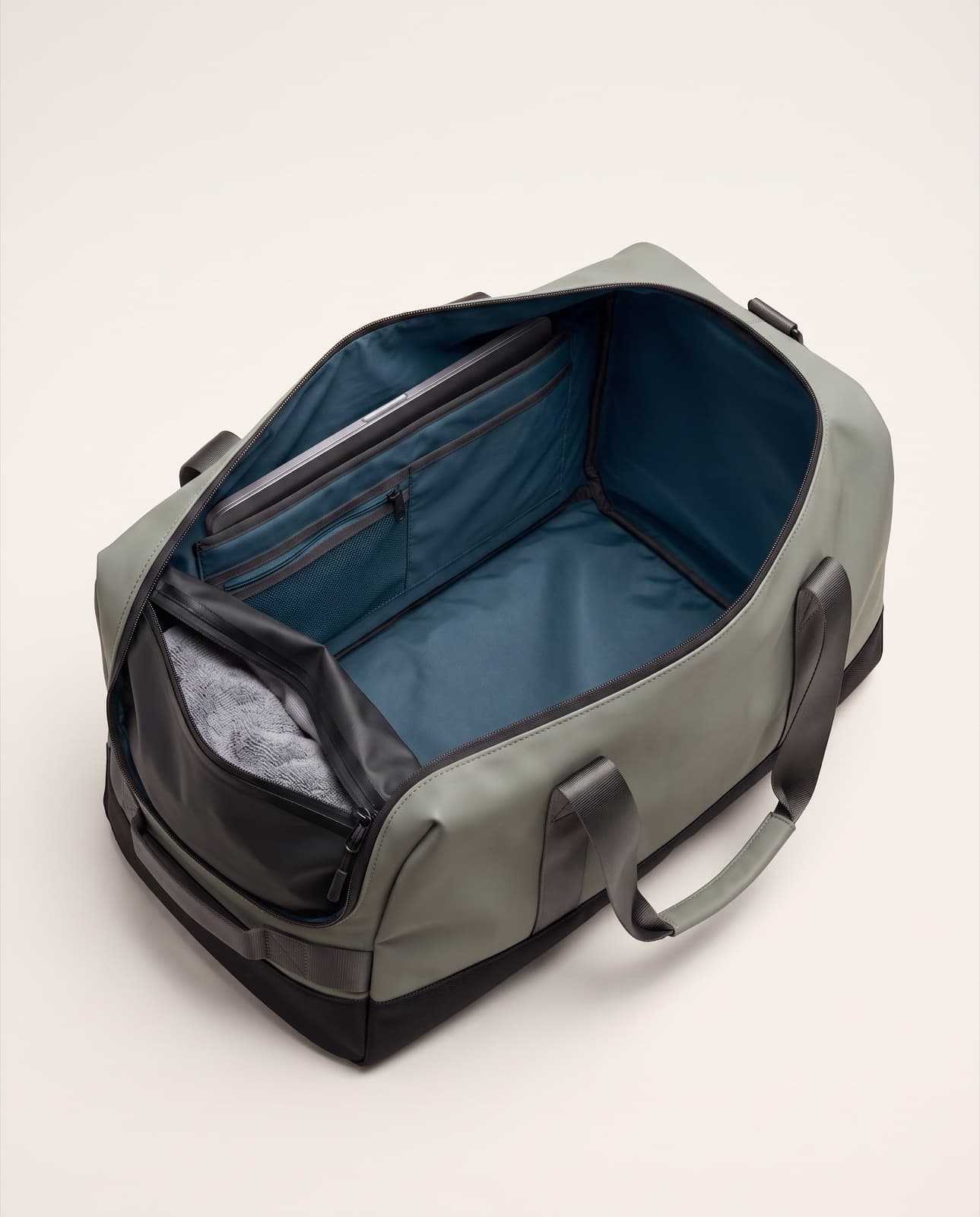
A gym bag does not develop a smell. It acquires a population.
The distinction matters, because it explains why airing the bag out on a balcony does almost nothing, why the smell returns within a week of a wash, and why the problem is dramatically worse in Singapore or Hong Kong than it is in Berlin. If you understand what is actually living in the bag, the fix becomes obvious and mostly free.
What is actually happening
Fresh sweat is close to odourless. What you smell is bacterial metabolism: skin bacteria breaking down the fatty acids, amino acids and hormones in sweat into small volatile compounds, several of which the human nose is exquisitely tuned to find unpleasant.
Fabric choice changes which bacteria get to do that work. In a 2014 study in Applied and Environmental Microbiology, researchers collected t-shirts from 26 people after an intensive spinning session and incubated them for 28 hours. The polyester shirts smelled significantly less pleasant and more intense than the cotton ones. Micrococci — bacteria with a particular enzymatic talent for turning long-chain fatty acids into malodorous volatiles — were isolated from almost all the synthetic shirts and almost none of the cotton. Staphylococci were abundant on both.
So: synthetic training kit, sealed damp in a bag, at 30°C, for six hours, is close to an ideal incubator. Then you empty the bag and the bacteria that colonised the lining stay behind.
Three failures follow, and they need different fixes.
Failure one: wet kit and dry kit share a compartment
This is the one that causes everything else. A soaked singlet against the lining transfers moisture, bacteria and organic material into the bag itself. From then on, the bag is a source rather than a container.
The fix is physical separation, not deodorant. A waterproof pouch, a dry bag, or a compartment with a sealed waterproof lining, and everything that comes off you wet goes into it before it goes into the bag. If the bag has a shoe compartment with its own door, use it for shoes only — shoes are the second-worst offender and a ventilated, sealed compartment is exactly the right home for them.
In a tropical climate this is not fastidiousness. The difference between a bag that stays neutral for years and a bag that turns in a month is whether wet things are allowed to touch it.
Failure two: things do not dry
Bacterial growth needs moisture. Removing the moisture stops the process cold, and there is no chemical intervention that substitutes for it.
Empty the bag the same day. Every time. Not the next morning. The colonisation happens overnight.
Dry the bag itself, open, in moving air. Unzip every compartment and stand it upside down. A fan for an hour beats a balcony for a day in a humid climate, where ambient air is often not dry enough to do the job.
Get shoes out immediately and let them dry with the tongues open. If they get properly soaked, newspaper or a boot dryer, not a radiator.
Never store a bag zipped shut with anything damp inside it. This is how you get mildew on the lining, which is a different and much harder problem than odour.
Failure three: the kit itself is already colonised
If your shirts smell within ten minutes of putting them on, the bacteria survived your last wash. Common causes, in rough order of frequency:
Fabric softener. It deposits a hydrophobic film on synthetic fibres. That film reduces wicking, holds oils and gives bacteria somewhere to live. Do not use it on technical fabric — ever, on anything you sweat in.
Washing too cold, with too little detergent, in an overloaded machine. Synthetics need mechanical action and enough surfactant to lift body oils. A crammed machine at 20°C achieves neither.
Leaving the wash in the drum. Two hours damp in a warm machine undoes the wash.
The machine itself. Front-loaders develop biofilm in the door seal and detergent drawer. If everything you own smells slightly of gym, suspect the machine before the clothes.
The recovery routine for kit that has already gone: a soak in an oxygen-based laundry booster or a dilute white vinegar solution for an hour, then a hot-as-the-label-allows wash with a full dose of detergent and no softener, then dried fully and promptly. Repeat once if needed. If a garment has been mildewed rather than merely smelly, it is often not recoverable.
Cleaning the bag itself
Most technical bags are coated nylon or polyester with a polyurethane or laminate layer, and they do not want to go in a washing machine — the drum abrades the coating and the hardware, and detergent residue in a coated fabric is difficult to rinse out.
The routine that works:
- Empty every pocket. Turn out any removable liner.
- Vacuum the interior. A surprising amount of what smells is loose organic material — sand, skin, food crumbs.
- Wipe the interior with a cloth and a mild detergent solution, then again with clean water. For a waterproof-lined compartment you can be more aggressive, because that is what the lining is for.
- For a persistent problem, wipe with a dilute white vinegar solution and let it dry fully before it goes near clean clothes.
- Dry completely, open, in moving air. Completely means completely.
Avoid bleach on coated fabrics and avoid solvent-based cleaners on anything with a PU coating.
The climate variable nobody mentions
Polyurethane coatings hydrolyse. Warm, humid storage accelerates it. A bag stored for two years in an unventilated cupboard in a tropical apartment can develop a tacky interior surface and a distinct chemical smell — this is the coating breaking down, and no cleaning routine reverses it.
Store bags dry, loosely, with some air movement, and not in a sealed plastic box in a hot room. It is the difference between a five-year bag and a two-year bag.
The whole thing in four lines
- Wet things never touch dry things. Use a sealed compartment or a dry bag.
- Empty and open the bag the same day, always.
- No fabric softener on technical kit, and wash it warm with a full dose of detergent.
- Wipe the interior out every couple of months and let it dry completely.
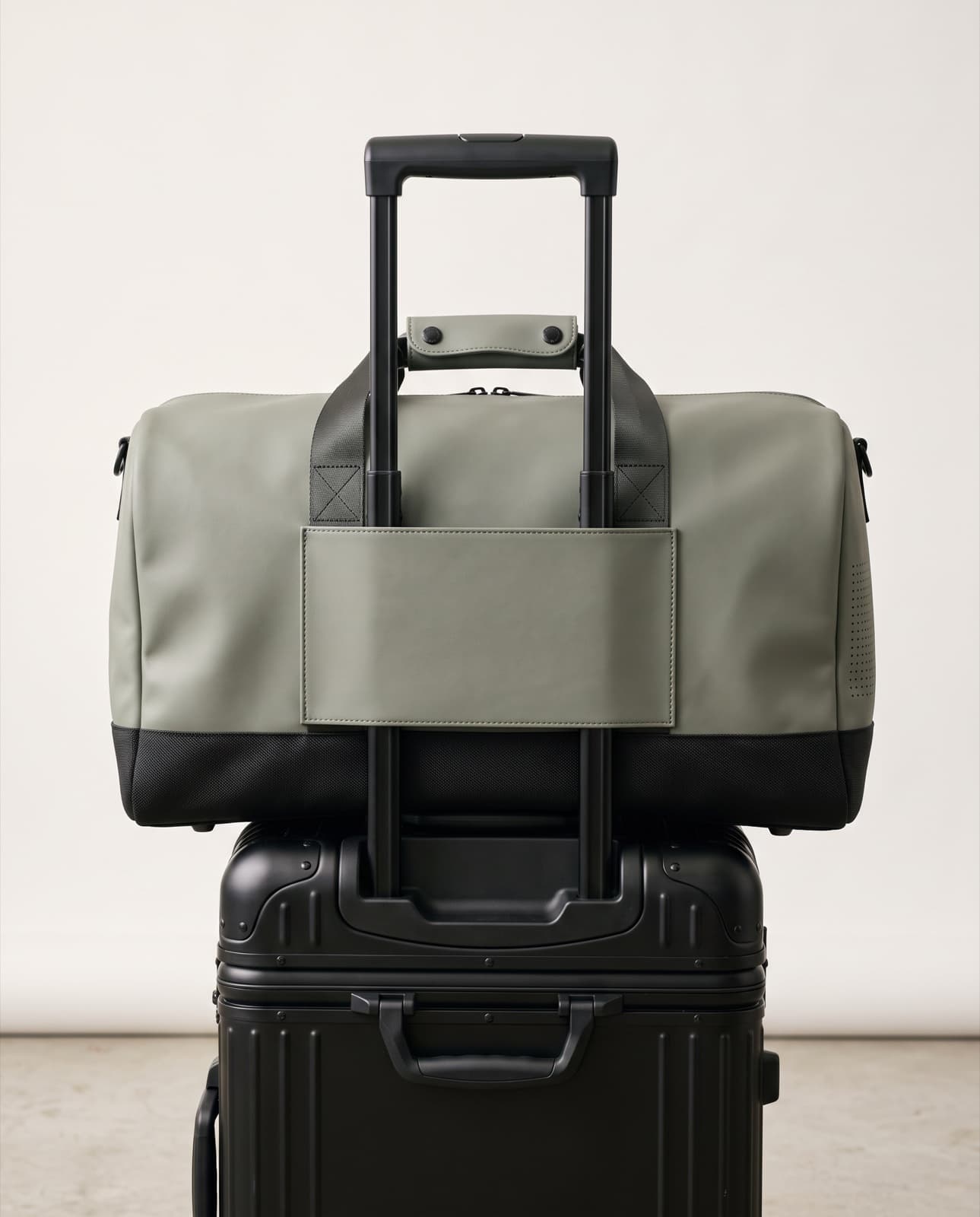
Nothing on that list costs anything. The one structural thing worth paying for is a bag that separates wet from dry properly in the first place, which is the reason our Duffel 50 has a waterproof-lined wet compartment and a sealed, ventilated shoe end rather than one large hopeful cavity.
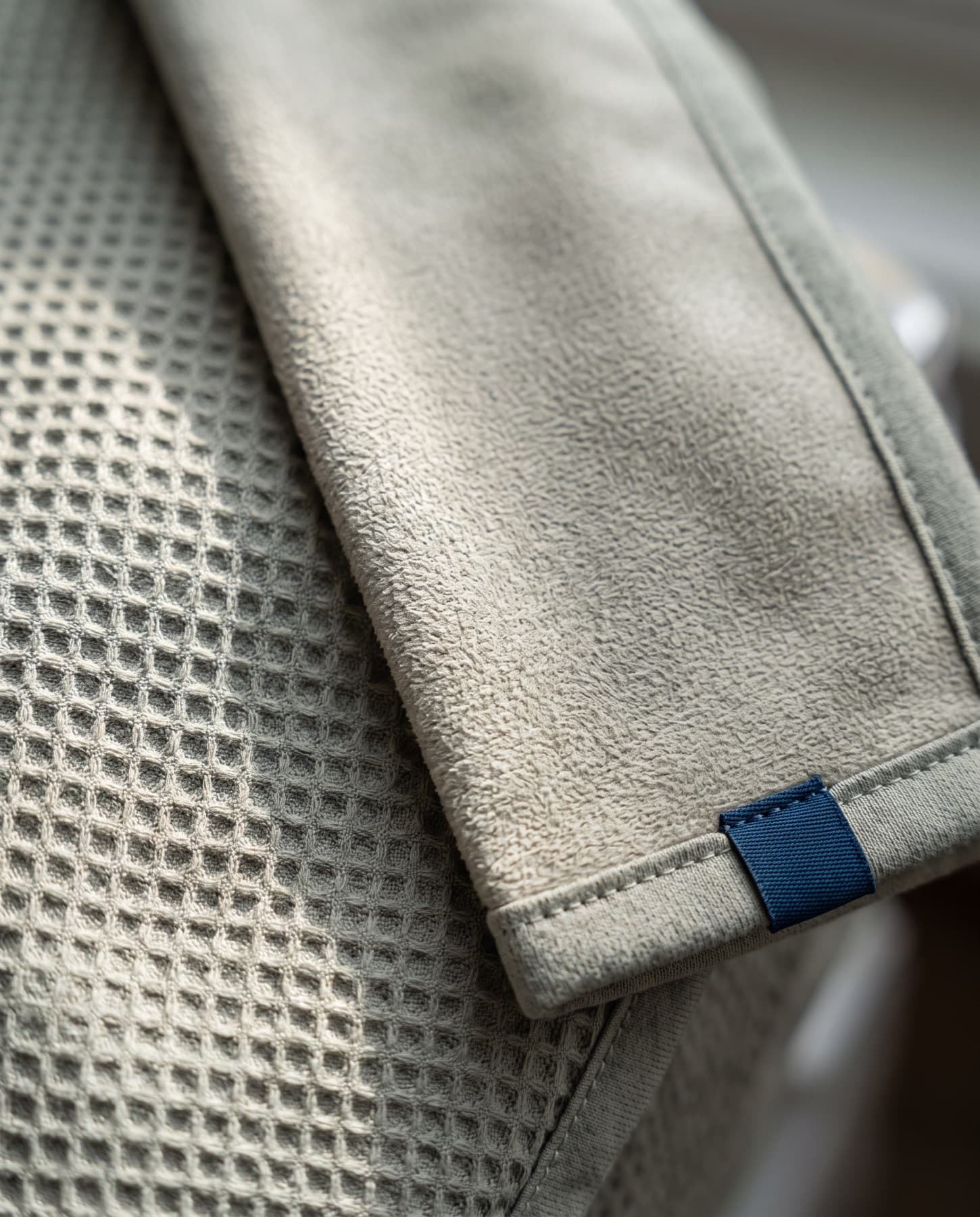
Related: how to wash a microfibre towel so it stays absorbent, and packing a race-day bag in three zones.
Common questions
- Why does my gym bag smell even after I empty it?
- Because the bacteria that cause the smell have colonised the lining, not just the clothes. Once wet kit has transferred moisture and organic material into the bag, the bag becomes a source. Wiping the interior out and drying it completely — with wet items kept in a sealed compartment in future — is what fixes it.
- Why do synthetic gym clothes smell worse than cotton?
- Fabric changes which microbes grow. A 2014 study in Applied and Environmental Microbiology found polyester shirts smelled significantly more intense and less pleasant than cotton after the same session, with micrococci — bacteria that convert long-chain fatty acids into malodorous volatiles — isolated from almost all synthetic shirts and almost no cotton ones.
- Can I put a technical duffel in the washing machine?
- Generally no. Machine drums abrade coatings and hardware, and detergent residue is hard to rinse out of coated fabric. Vacuum the interior, wipe with a mild detergent solution, wipe again with clean water, and dry fully in moving air.
- Does fabric softener cause gym clothes to smell?
- It contributes. Softener leaves a hydrophobic film on synthetic fibres that reduces wicking and gives oils and bacteria somewhere to sit. Do not use it on anything technical you sweat in.
Sources
- Microbial Odor Profile of Polyester and Cotton Clothes after a Fitness Session — Callewaert et al., Applied and Environmental Microbiology, 2014
Source of the polyester versus cotton odour finding and the micrococci result.
Written and checked against the sources above on 24 August 2026. If something here is wrong or has gone out of date, tell us and we will correct it — see our editorial standards.
Read next
Out of stock · November drop
Every run is small, numbered, and allocated from the list.
Every unit is made to order in a numbered run of 150. Allocation is offered to the list in order. When yours comes up we send a secure link, you pay in full, and your unit enters the run. Ships November 2026. Cancel for a full refund any time before the batch enters production.