How to wash a microfibre towel so it keeps absorbing
A towel that stops absorbing is usually contaminated, not worn out. The mechanism, the five things that cause it, and the vinegar wash that reverses most of it.
OTTAVA Editorial · Published 24 August 2026 · 4 min read
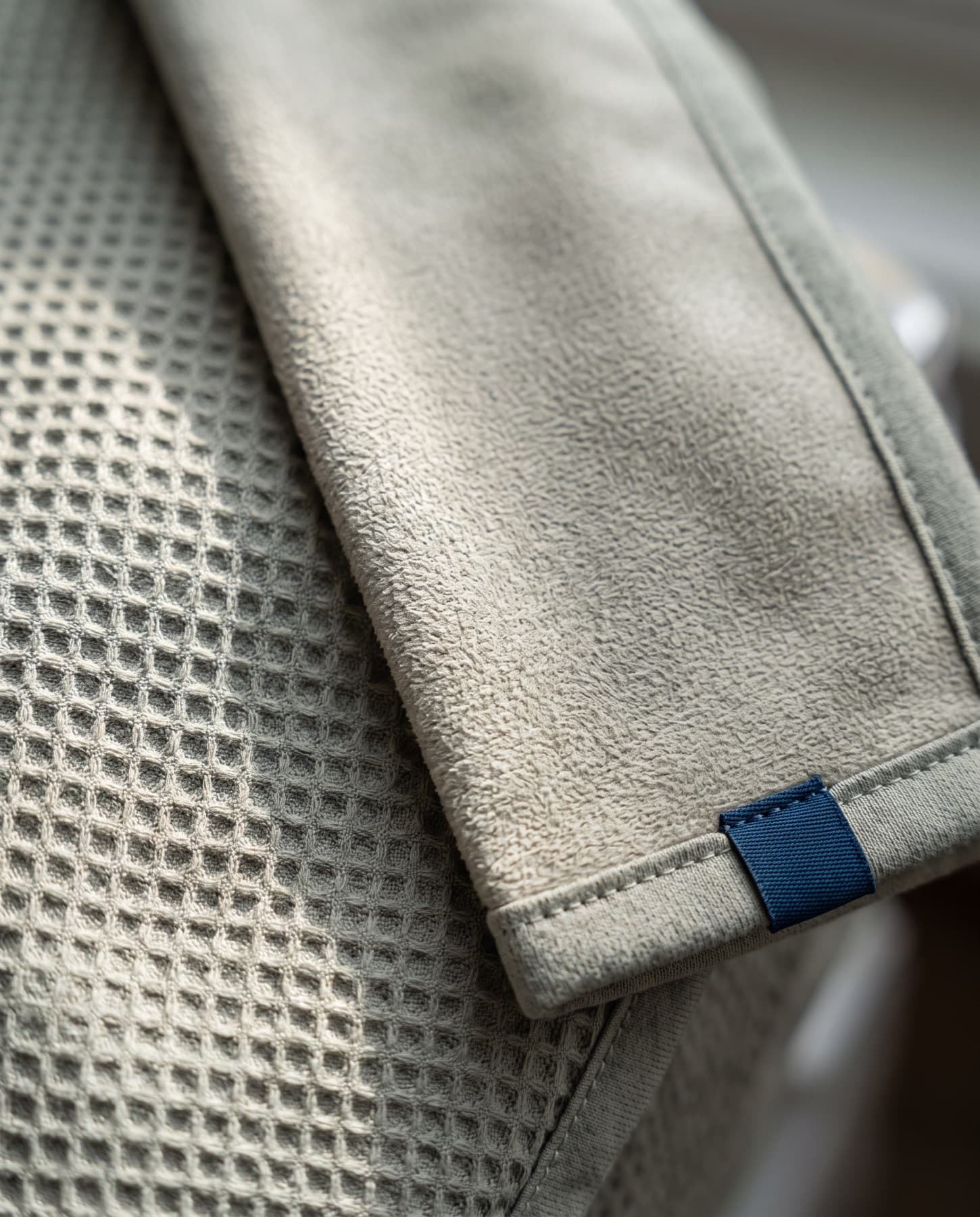
Microfibre towels fail in a specific and recognisable way. They stop absorbing. Water beads on the surface and gets pushed around instead of taken up, and the towel that worked beautifully for a year is suddenly worse than a cheap cotton one.
That is almost never wear. It is contamination, and it is usually reversible.
How the fabric works, briefly
Microfibre is a blend of polyester and polyamide — typically 80/20 or 85/15 — extruded as very fine filaments and then split, which multiplies the surface area enormously and creates a dense network of tiny channels.
Absorbency comes from capillary action in those channels, not from the fibre material itself. Polyester is hydrophobic. The towel works because of its geometry.
That single fact explains everything else. Anything that coats the fibres or fills the channels destroys the geometry, and with it the towel.
What GSM actually tells you
GSM is grams per square metre — the mass of fabric per unit area, and therefore a rough proxy for density and thickness.
- 250 to 300 gsm. Light, fast-drying, packs to nothing. Good travel and sports towels; less pleasant on skin, and they saturate quickly.
- 350 to 450 gsm. The useful middle. Enough capacity for a full session or a sauna round, still dries within hours indoors. Most well-made gym towels sit here. Ours is 400.
- 500 gsm and up. Plush, slower to dry, better for a bathroom than a bag. In a humid climate a heavy towel that stays damp all day is a liability.
GSM is not a quality score. A poorly split 500 gsm cloth absorbs worse than a well-made 350. It tells you about weight, not about how well the fibres were engineered.
The five things that kill a microfibre towel
1. Fabric softener. The single most common cause. Softeners work by depositing a thin cationic film on fibres. On cotton that feels pleasant. On split microfibre it fills the capillary channels and makes the surface hydrophobic. One wash with softener measurably reduces absorbency; a habit of it ruins the towel.
2. Dryer sheets. Same mechanism, delivered as wax rather than liquid. Same outcome.
3. Heat. Polyester and polyamide are thermoplastics. High dryer heat glazes the split fibre tips and permanently flattens the surface. The towel goes slightly shiny and stops gripping water.
4. Washing with cotton. Microfibre is an outstanding lint magnet — that is what it is for. Wash it with towels or fleece and it will collect their fibres into the same channels that should be collecting water.
5. Not drying between uses. A damp towel folded into a bag in a humid climate grows the same bacterial population as your kit, and eventually mildew, which stains and does not come out.
The washing routine that keeps one working
- Wash separately, or at least only with other synthetics.
- Warm, not hot. 40°C is right for routine washing. Go to 60°C only if the care label allows it and only when you need sanitisation.
- A normal dose of ordinary detergent. Liquid detergent rinses more cleanly out of fine fibre than powder, which can leave residue.
- No softener. No dryer sheets. No bleach. Bleach degrades polyamide.
- Extra rinse if your water is hard. Mineral deposits stiffen the fabric over time.
- Line dry, or tumble on low or no heat. In a humid climate, hang it somewhere with air movement rather than in a closed bathroom.
Reviving one that has stopped absorbing
Assuming it is contamination rather than heat damage, this usually works:
- Wash with no detergent at all, warm, with about 120 ml of white vinegar in the drum. This strips the cationic film left by softener and dissolves mineral deposits.
- Run a second wash with a normal dose of detergent and no additives.
- Dry fully, low heat or line.
If absorbency comes back, the problem was softener or hard water. If it does not, the fibre tips have been heat-glazed, and there is no recovering that. Buy a better one and stop using the dryer on it.
For a towel that smells rather than fails to absorb, the same oxygen-based booster routine that works on training kit works here — the gym bag piece has it.
Two-face towels, and why they exist
A conventional towel asks one surface to do two jobs. Waffle or terry structures hold volume and move a lot of water quickly, which is what you want mid-session. A sueded face grips and wipes cleanly without dragging, which is what you want on skin and on a bench.
Building both into a single knitted cloth — rather than sewing or bonding two fabrics together — means there is nothing to delaminate after fifty washes, which is the usual failure of two-layer towels. That is the construction behind our Two-Sided Towel: waffle on one face, suede on the other, 400 gsm, 85/15 microfibre, one cloth.
Antimicrobial finishes are worth a sentence of scepticism. They slow odour development; they do not replace washing, and they wear off over the life of the towel. Treat them as a convenience, not a hygiene strategy.
For sauna and bathhouse use
Bring two. One to sit on, which will be soaked, and one that stays dry for afterwards. This is the rule in most bathhouses, and it is the difference between a good session and a damp walk home.
Do not put a sauna-used towel back into a closed bag without a waterproof pouch. High heat, salt, moisture and a sealed compartment for three hours is exactly the environment you have just spent this article learning to avoid.
Common questions
- Why has my microfibre towel stopped absorbing water?
- Almost always fabric softener or dryer sheets, which deposit a film that fills the capillary channels the towel depends on. Hard-water minerals and high dryer heat do similar damage. Wash it with white vinegar and no detergent, then a normal wash, and absorbency usually returns.
- What GSM should a gym towel be?
- Between 350 and 450 gsm for most people. Lighter towels dry faster but saturate quickly; heavier than 500 gsm stays damp too long in a humid climate. GSM describes weight, not quality — a well-split 350 outperforms a poorly made 500.
- Can I use fabric softener on microfibre?
- No. Softener coats the split fibres and makes a hydrophobic fabric behave hydrophobically again, which is the opposite of the point. Dryer sheets do the same thing with wax.
- What temperature should I wash a microfibre towel at?
- 40°C for routine washing, with liquid detergent and no additives. Go to 60°C only if the care label allows it and you need sanitisation. Line dry or tumble on low — high heat glazes the fibre tips permanently.
Read next
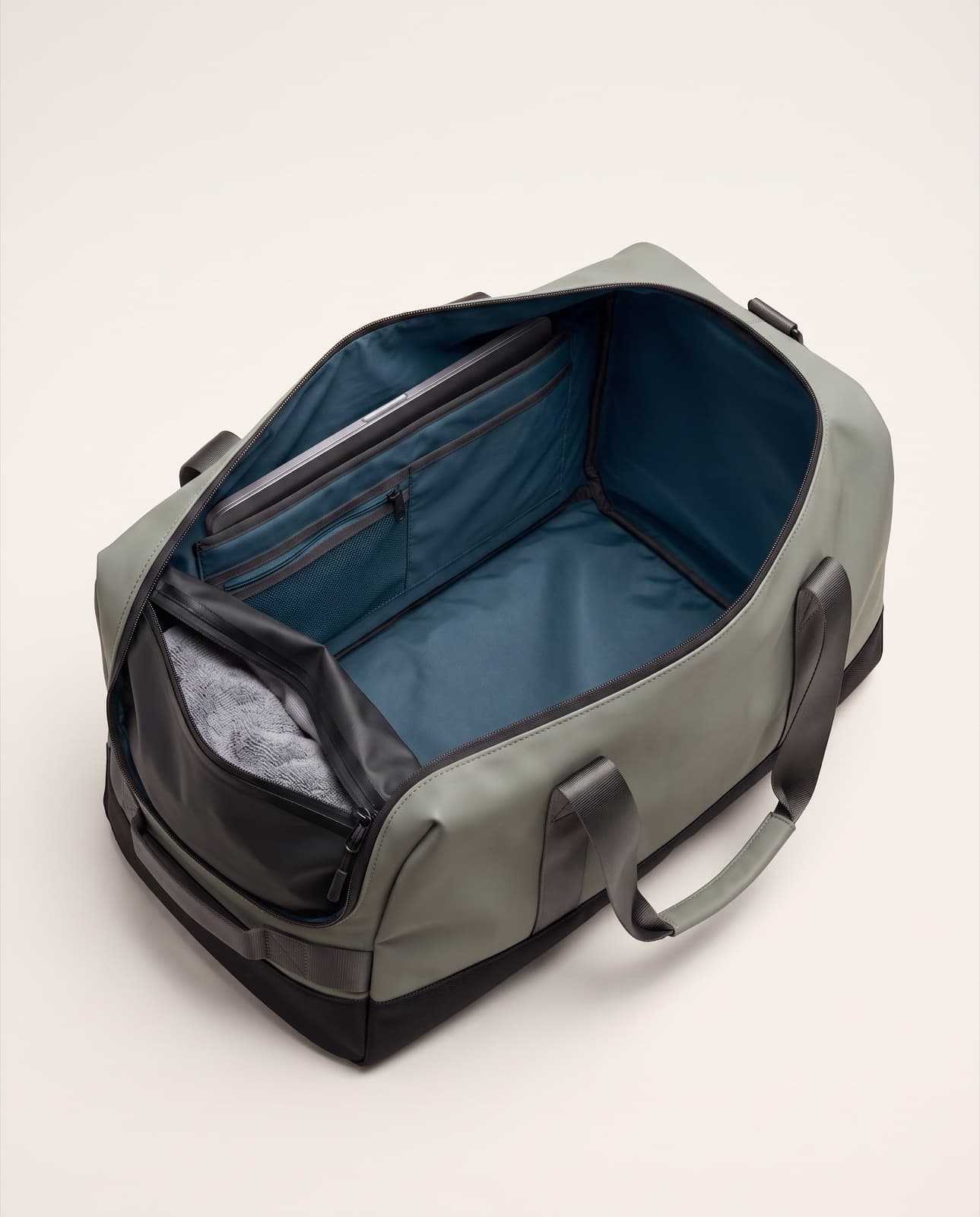
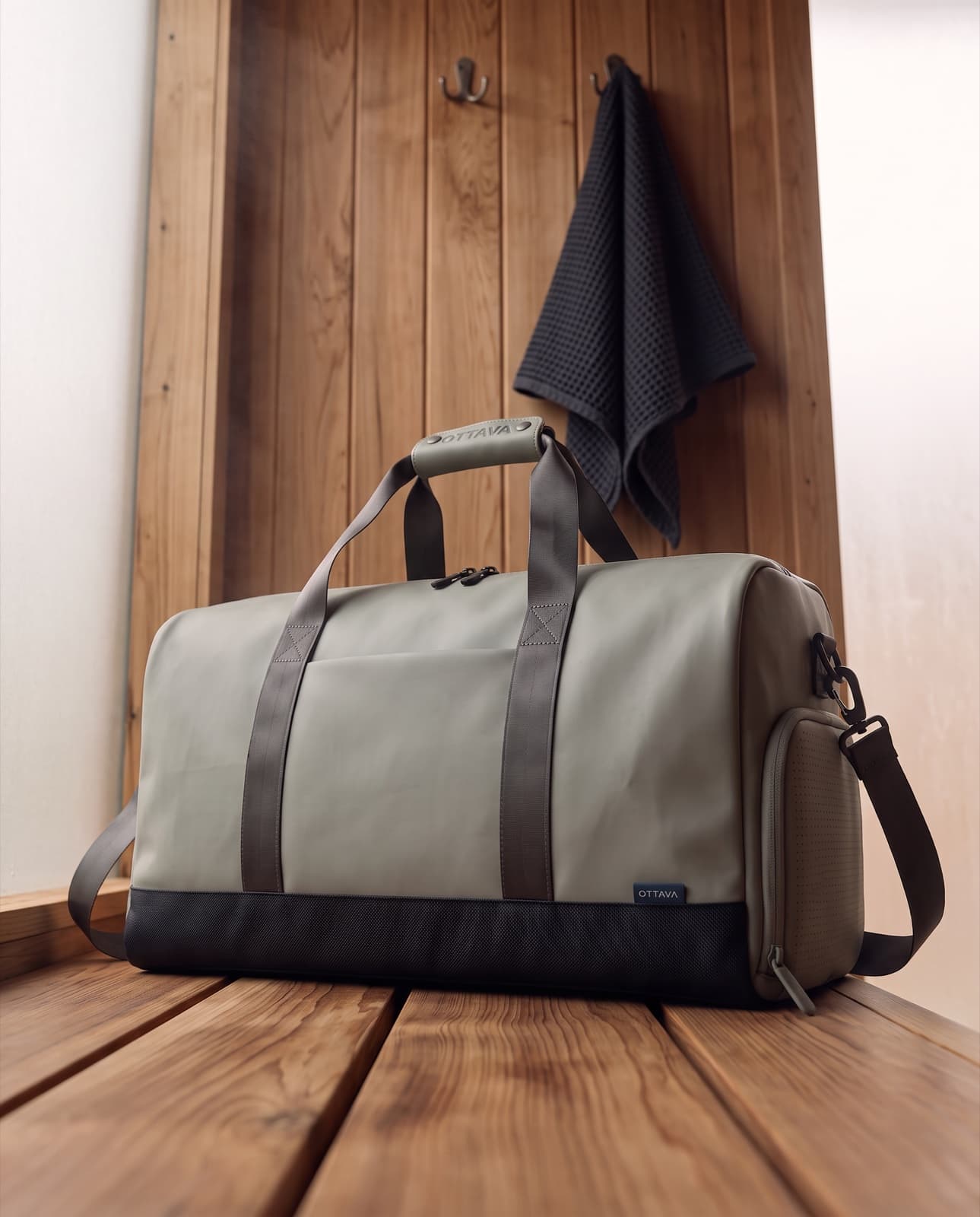
Out of stock · November drop
Every run is small, numbered, and allocated from the list.
Every unit is made to order in a numbered run of 150. Allocation is offered to the list in order. When yours comes up we send a secure link, you pay in full, and your unit enters the run. Ships November 2026. Cancel for a full refund any time before the batch enters production.