How big should a gym duffel be? 30, 40 or 50 litres
There is no standard for measuring bag volume. Start from the day you are packing for, then learn to read the spec sheet.
OTTAVA Editorial · Published 24 August 2026 · 6 min read
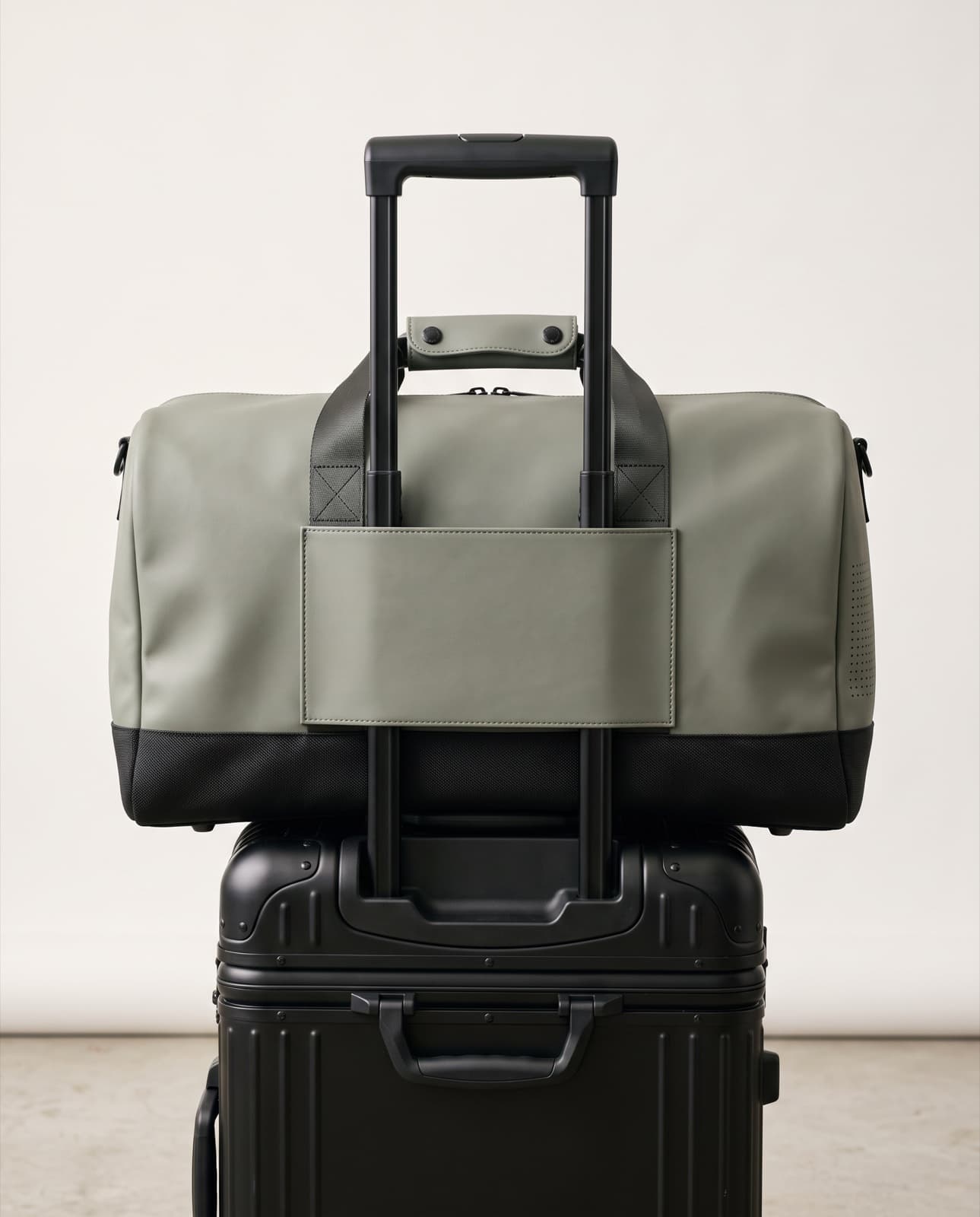
Litres are the least reliable number in luggage. There is no standard for how a bag's volume is measured, and manufacturers are free to compute it from external dimensions, from internal usable space, or from a geometric approximation of a shape that is not actually a box.
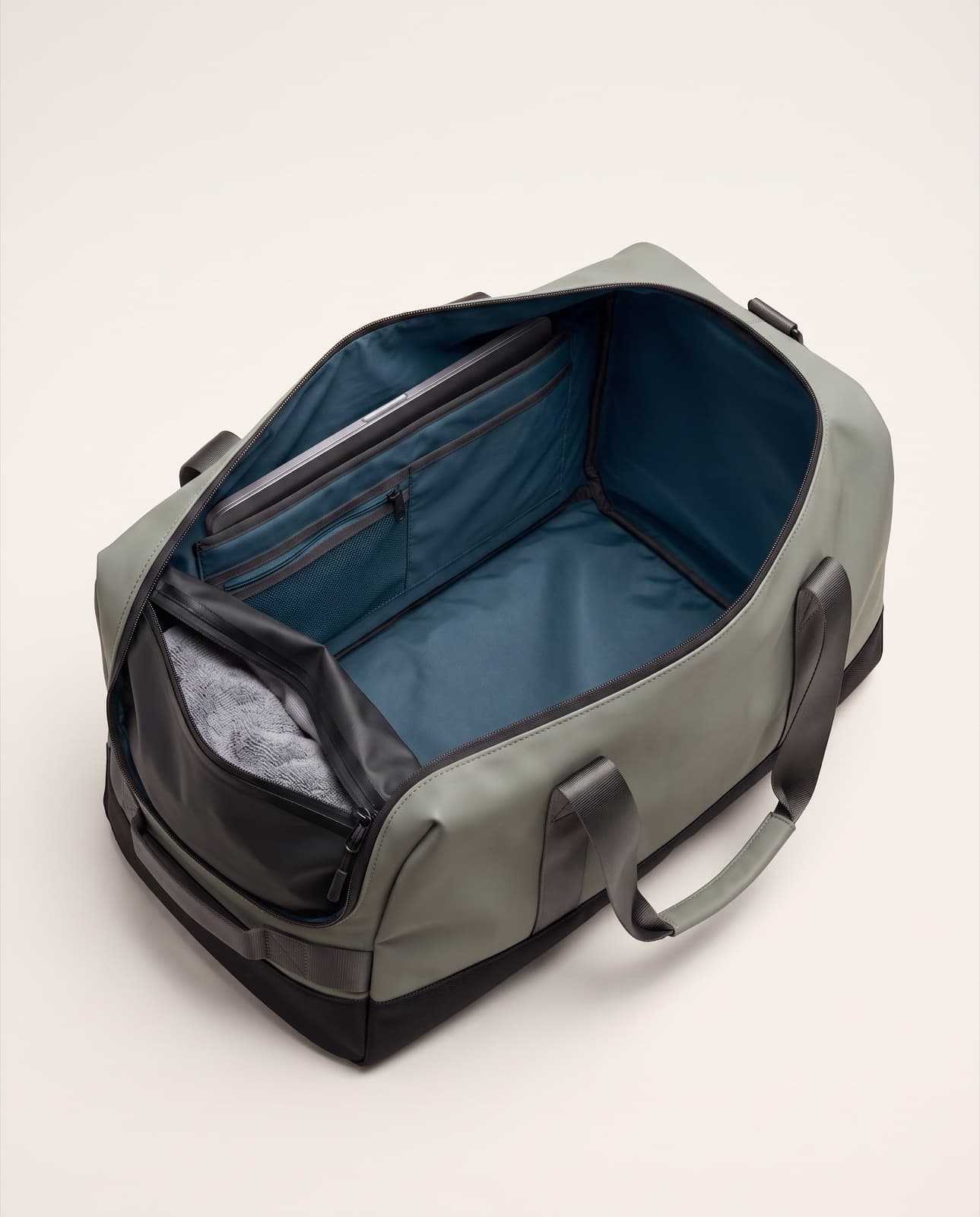
Our own bag makes the point. The Duffel 50 is 50 litres gross and 32 litres in the main compartment; the missing 18 sit in the shoe end, the wet compartment and the organiser. Both numbers are true and only one of them tells you what you can pack. A competitor quoting 50 litres with one undivided cavity is describing a different object.
So start from what you need to carry, not from a number.
What fits, honestly
Rough guidance, assuming a soft-sided duffel and normal packing rather than compression cubes and resolve.
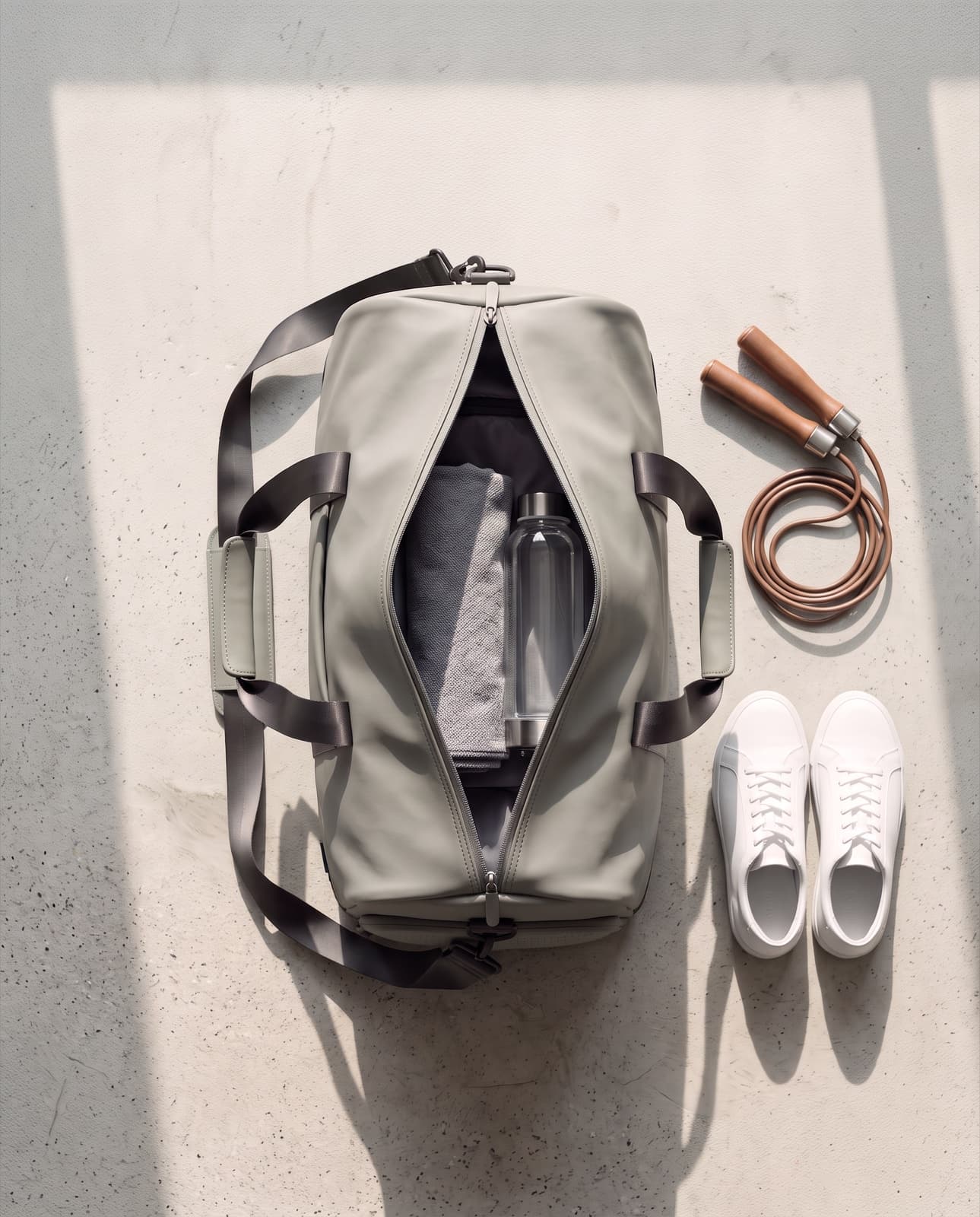
25 to 30 litres. One training session. Kit, shoes, a towel, a bottle, a laptop if the bag is designed for one. Not an overnight bag unless you are unusually disciplined.
35 to 50 litres gross. A training session plus a night away, or a full race weekend. Shoes, two changes of clothes, a wash bag, a towel, a laptop and the small things. This is the band that covers the widest range of real days — but read it as gross, because a compartmented bag in this band gives you roughly 30 to 35 litres of packable main space.
45 to 55 litres. Three or four days without checking a bag, or one training session plus a full change plus equipment. It is also the size at which a duffel stops being pleasant to carry on one shoulder when full.
Over 60 litres. A trip bag. Buy wheels.
Most people who train and travel end up somewhere between 40 and 50 gross, for one reason: it is the largest a soft bag gets while still fitting typical carry-on allowances and still feeling like a bag rather than a project.
The carry-on constraint
Cabin allowances vary by airline and change often, so check yours rather than trusting a chart. Two patterns hold across most Asian and European carriers.
Dimensions cluster around 55 × 40 × 20 cm to 56 × 36 × 23 cm. A soft duffel in the 40 to 50 litre band that is not overstuffed generally sits inside this. A rigid bag of the same stated volume frequently does not, because the corners cannot give.
Weight limits in Asia are stricter than in North America — commonly 7 kg for cabin baggage on full-service carriers in this region, and increasingly enforced.
That second point is the one that matters and the one nobody thinks about when buying. If the allowance is 7 kg and the empty bag weighs 1.6 kg, you have spent nearly a quarter of your allowance on the bag. Empty weight is a specification worth asking for, and very few brands publish it prominently.
What actually decides the bag, once size is settled
Wet-dry separation. If you swim, plunge, sauna or sweat through kit in a humid city, this is not a feature — it is the whole design problem. Everything that comes off you wet has to travel home without touching anything dry. A waterproof-lined compartment does this. A mesh pocket does not.
A shoe compartment, and what it costs. A sealed, ventilated shoe end is genuinely useful and it consumes real volume — usually 6 to 9 litres of the stated capacity. That is a good trade for anyone carrying training shoes daily and a poor one for someone who wants maximum open space. Know which you are.
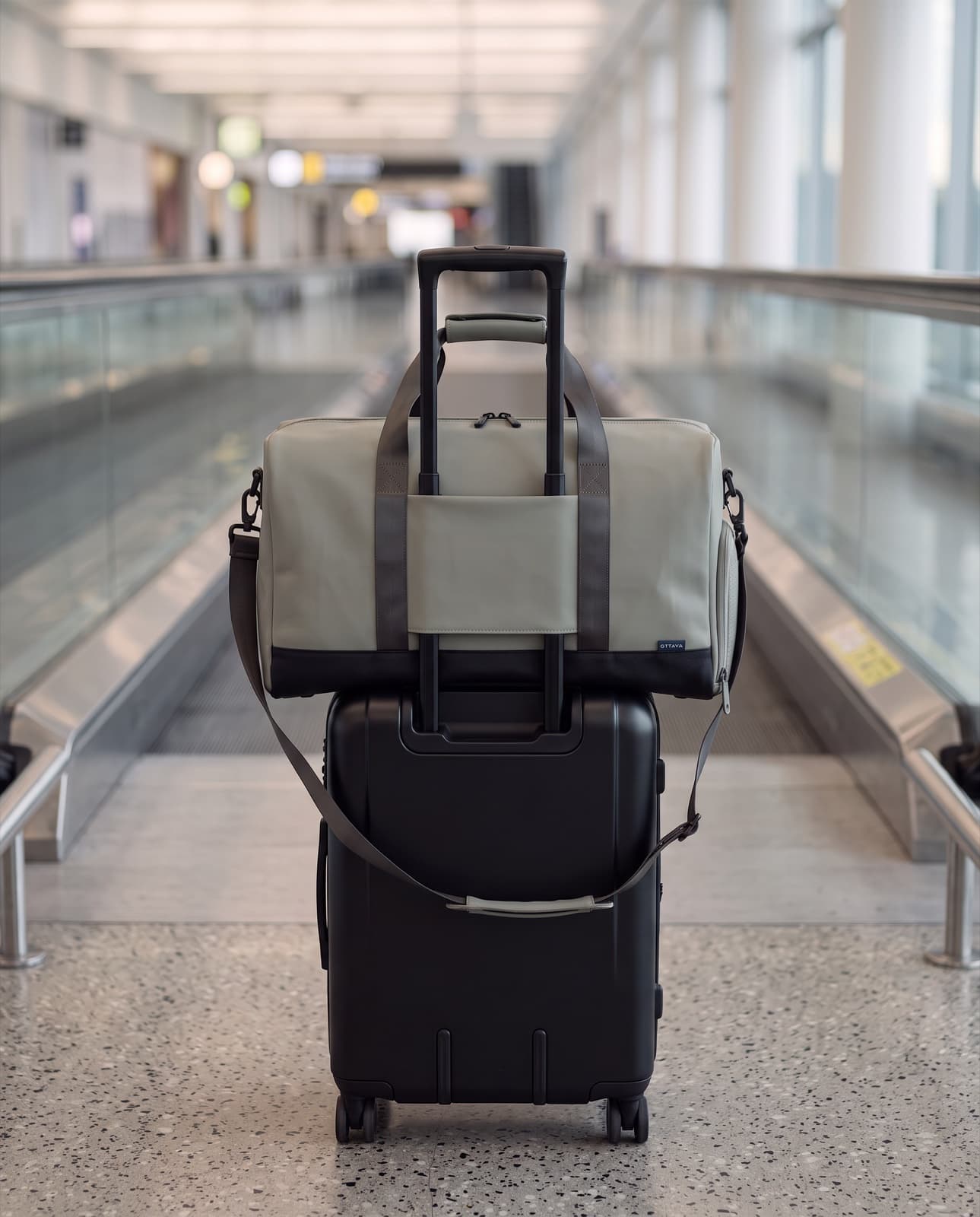
Carry system. In cities where you move by train, a bag you can sling and forget beats a bag you keep putting down. A removable shoulder strap with a proper pad, grab handles that meet cleanly, and a trolley sleeve if you fly. Backpack straps on a duffel are a compromise that suits people commuting by bicycle and nobody else.
Opening geometry. A U-shaped or clamshell opening lets you see everything at once. A slot opening means unpacking three things to reach the fourth, in a changing room, on the floor.
Reading a materials spec
Most technical bag specs are a short list of numbers, and they are decodable.
Denier (D). A measure of yarn linear density — grams per 9,000 metres. Higher denier means thicker yarn, generally more abrasion resistance and more weight. 420D is light and packable, 1000D is the classic Cordura workhorse, 1680D ballistic is heavier and very tough. Denier alone tells you nothing about weave or coating, so a 1680D bag is not automatically stronger than a 1000D one.
Cordura. A brand of fabric certified to a durability standard rather than a fibre type. Genuine Cordura carries a licence. Vague "Cordura-like" claims usually mean plain nylon.
Coatings. Polyurethane or TPU laminates provide the water resistance. PU is cheaper and hydrolyses over years in hot, humid storage; TPU is more stable and costs more. A bag stored damp in a sealed cupboard in the tropics is one whose lining will eventually go tacky — see the storage note in our piece on why bags start to smell.
The zips, and specifically which. Naming a zip brand tells you less than it looks like it does — the big houses all span a wide quality range. The callouts that actually matter on a duffel are the gauge, #8 or #10 on a main opening, and whether the main zip is genuinely sealed rather than merely coated.
Bartacks. The dense stitched blocks at load points: handle bases, strap anchors, D-rings. Bags fail at attachment points long before fabric wears through. If a product page shows you nothing but a hero shot, ask for a photograph of a handle base.
Hardware. Duraflex and ITW are the recognisable names in buckles and adjusters. Unbranded hardware is where cost is quietly removed.
A short decision table
| You mostly | Size | Non-negotiable feature |
|---|---|---|
| Train daily, commute by train | 30–40 L | Sealed shoe compartment, single-shoulder carry |
| Race weekends and short trips | 40–50 L gross | Wet-dry separation, trolley sleeve |
| Travel weekly, train at the hotel | 40–50 L gross | Carry-on dimensions, low empty weight, laptop sleeve |
| Sauna and plunge two or three times a week | 30–40 L | Waterproof-lined compartment, easy-to-wipe interior |
| Check a bag anyway | 55 L+ | Wheels, honestly |
Why we built a 50
The Duffel 50 exists because the day it is designed for is one day: a session in the morning, work, a flight or a plunge in the evening, and everything soaked in the middle of it. Fifty litres gross — 32 in the main compartment, the rest given over to the shoe end, the wet compartment and the organiser — is what that day needs. A detachable waterproof liner and a sealed shoe end are what stop the soaked half contaminating the dry half.
The specification, the materials and the guarantee are on the product page, and the design reasoning is in our story.
If you are packing for a race rather than choosing a bag, the three-zone race-day method is the more useful page.
Common questions
- Is a 40 to 50 litre duffel carry-on size?
- Usually, if it is soft-sided and not overstuffed. Cabin dimension limits cluster around 55 × 40 × 20 cm to 56 × 36 × 23 cm. The bigger constraint on many carriers is weight: full-service airlines commonly limit cabin baggage to 7 kg, so the empty weight of the bag matters more than people expect.
- What size gym bag do I need?
- For a single training session, 25 to 30 litres. For a session plus an overnight or a full race weekend, 35 to 50 litres gross — which in a compartmented bag is roughly 30 to 35 litres of packable main space. Above that a full duffel stops being comfortable on one shoulder.
- What does denier mean on a bag?
- Denier is the linear density of the yarn — grams per 9,000 metres. Higher denier means thicker yarn and generally more abrasion resistance and weight. 1000D is a common workhorse; 1680D ballistic is heavier and tougher. Denier says nothing about weave or coating, so it is not a complete quality measure.
- Does a shoe compartment reduce capacity?
- Yes, typically by 6 to 9 litres of the stated volume. That is a good trade if you carry training shoes daily and a poor one if you want maximum open space.
Read next
Out of stock · November drop
Every run is small, numbered, and allocated from the list.
Every unit is made to order in a numbered run of 150. Allocation is offered to the list in order. When yours comes up we send a secure link, you pay in full, and your unit enters the run. Ships November 2026. Cancel for a full refund any time before the batch enters production.