Ice baths: what the evidence supports, at what dose, and when to skip them
Cold immersion buys tomorrow at the expense of next month. A dose guide and a decision table, built from what the meta-analyses actually say.
OTTAVA Editorial · Published 24 August 2026 · 6 min read
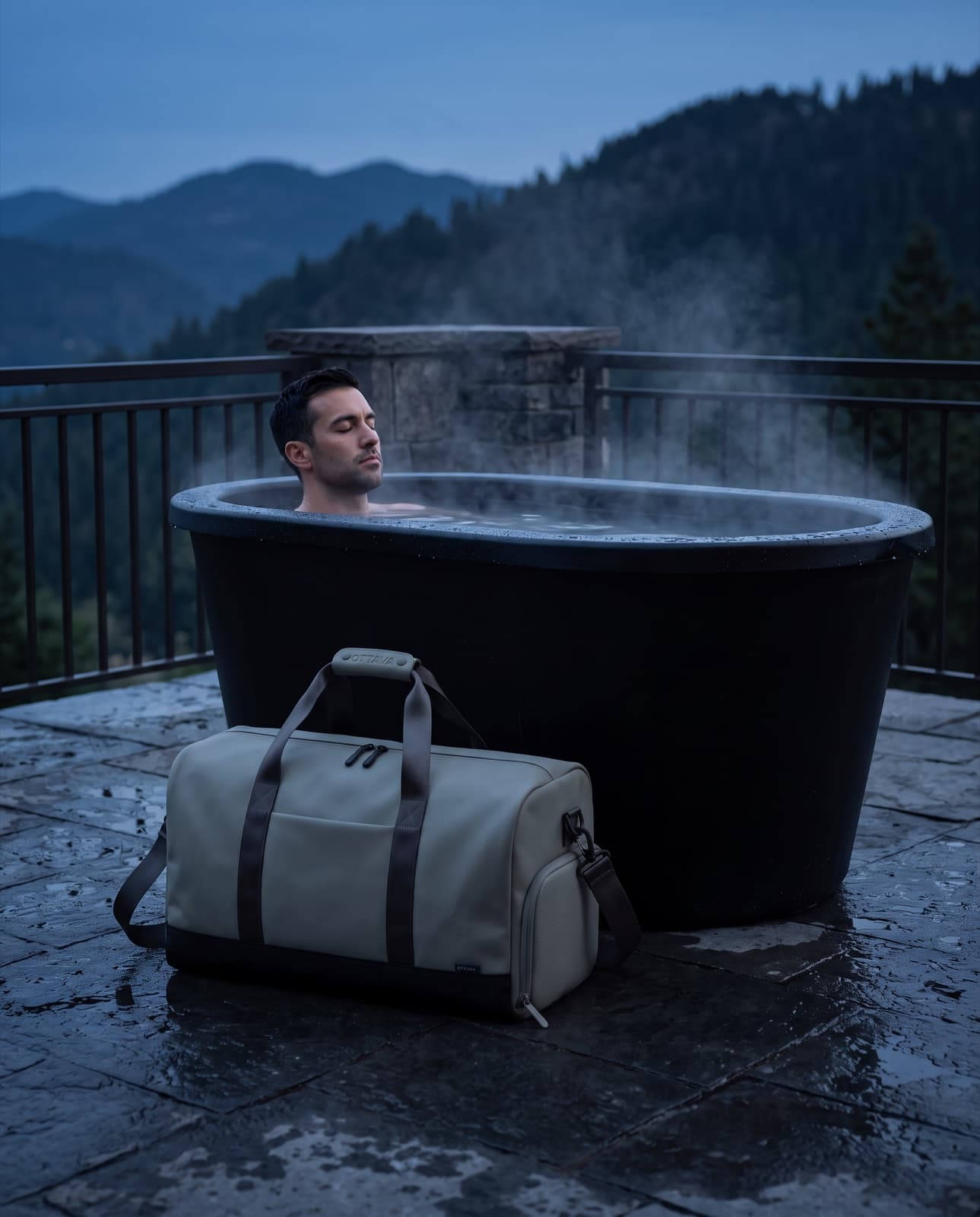
The cold plunge has finished its journey from fringe to furniture. It is now standard equipment from London to Hong Kong — in purpose-built bathhouses, in gym recovery rooms, and in the corner of enough apartments that installing one has become a business of its own.
The interesting question is no longer whether cold water does anything. It clearly does. The question is what it does, at what dose, and what it costs you on the days you use it.
The short version: cold immersion is a good tool for feeling recovered and a poor tool for becoming stronger. Those two goals are in direct tension, and which one you are serving on a given evening should decide whether you get in.
What it reliably does
It reduces soreness and markers of muscle damage. This is the best-supported effect. A 2025 network meta-analysis in Frontiers in Physiology compared doses of cold water immersion for recovery from exercise-induced muscle damage and found clear winners. For delayed-onset muscle soreness, 10 to 15 minutes at 11 to 15°C ranked best (SUCRA 84.3 per cent). For creatine kinase — a blood marker of muscle damage — and for jump performance, 10 to 15 minutes at 5 to 10°C ranked best (SUCRA 75.7 and 70.4 per cent respectively).
Note what that table implies. The colder protocol is not better for everything. For soreness specifically, the merely cold water performed better than the very cold water, which is convenient, because 12°C is a great deal easier to sit in for twelve minutes than 6°C.
It lowers stress, but on a delay. A 2025 systematic review and meta-analysis in PLOS One pooled 11 randomised trials and 3,177 participants on health and wellbeing outcomes. Stress was significantly reduced 12 hours after cold immersion (SMD −1.00), with no significant effect immediately, at one hour, at 24 hours or at 48. Quality-of-life scores improved at 30 days and the effect had faded by 90. Sleep quality improved. Mood showed no significant difference against control. Cold showers were associated with a 29 per cent reduction in sickness absence.
That review also found something people rarely quote: inflammation increased immediately after immersion (SMD 1.03) and at one hour (SMD 1.26). Cold water is a stressor. The benefit, where it exists, is downstream of the stress, not instead of it.
What it appears to cost
If you lift to grow muscle, cold immersion straight afterwards is working against you.
A 2024 systematic review with meta-analysis in the European Journal of Sport Science — the one titled "Throwing cold water on muscle growth" — pooled 8 studies on post-exercise cold water immersion and resistance-training hypertrophy. The primary analysis favoured resistance training alone over resistance training plus immersion (cSMD −0.22, 95 per cent credible interval −0.47 to 0.04), with a 95.7 per cent probability that the true effect is negative.
Two things about that number, both of which matter.
It is a small effect, and its credible interval crosses zero. This is not evidence that an ice bath erases your training. It is evidence of a modest, consistent tax.
And the authors themselves flag that the underlying studies are of fair-to-poor quality. Anyone quoting this literature as settled — in either direction — is over-reading it.
The mechanism proposed is that cold blunts the acute inflammatory and anabolic signalling that follows resistance training, and that signalling is part of how the adaptation happens. That story is plausible and it is consistent with the strength findings, where routine post-lifting immersion has been associated with attenuated gains in maximal strength.
The decision, in one table
| Situation | Plunge? | Dose |
|---|---|---|
| After a race or competition, season over | Yes | 10–15 min, 5–10°C |
| Multi-day event, another race tomorrow | Yes | 10–15 min, 5–10°C, as soon as practical |
| Congested fixture block, performance tomorrow matters more than adaptation | Yes | 10–15 min, 11–15°C |
| Very sore, sleep being affected | Yes | 10–15 min, 11–15°C |
| After a hypertrophy or max-strength session | No | Leave 4–6 hours, or skip |
| Base or build block, adaptation is the goal | Mostly no | Reserve it for the worst weeks |
| Before a strength session | No | Cold muscle produces less force |
| Because it is Tuesday and the plunge is there | Optional | Treat as wellbeing, not recovery |
The organising principle: cold immersion buys tomorrow at the expense of next month. When tomorrow genuinely matters more — a second race day, a tournament, a week where you cannot afford to be wrecked — it is the right trade. When next month matters more, it is not.
If you want the benefit without the tax, the simplest lever is time. Separate the cold from the lifting by four to six hours, or take it on a different day entirely. Almost all of the reported interference comes from immersion immediately after the session.
Doing it properly
Temperature. Somewhere between 5 and 15°C covers everything the evidence supports. Colder is not more virtuous. Most commercial plunges run somewhere between 3 and 10°C, which is at or below the cold end of the studied range, so shorten the time accordingly.
Duration. Ten to fifteen minutes at 11 to 15°C. Two to five minutes is plenty at 3 to 6°C. Anyone doing fifteen minutes at 4°C is no longer running a recovery protocol.
Immersion depth. Studies overwhelmingly use whole-body or lower-body immersion to the waist or chest. Sitting with your feet in cold water is a different, much weaker intervention.
The first minute is the hard one. The cold shock response — the gasp, the involuntary hyperventilation, the spike in heart rate — peaks in the first 30 to 60 seconds and then settles. The technique is simply to control the exhale until it passes. If your breathing is not under control by 60 seconds, get out.
Never in open water alone, and never after drinking. The cold shock response is the mechanism behind most cold-water drownings. In a controlled plunge with staff nearby this is a low-risk activity; in a reservoir at dawn on your own it is not.
Talk to a doctor first if you have a cardiac condition, uncontrolled hypertension, Raynaud's, or are pregnant. Cold immersion sharply raises blood pressure and cardiac workload in the first minute. This is the one contraindication worth taking seriously rather than nodding at.
Rewarm passively. Dry off, put clothes on, move gently. Core temperature keeps falling for a while after you get out — the afterdrop — so the shivering ten minutes later is normal and is not a reason to get back in.
What about the sauna next to it
Most venues now sell the pair. Whether you should go heat first or cold first, and whether contrast cycling does anything the individual exposures do not, is a separate question with a clearer answer than you would expect: see sauna or ice first.
If your interest in the sauna is performance rather than pleasure, the heat literature is the stronger of the two — sauna protocols for athletes covers the dose and the evidence.
The honest summary
Cold immersion makes you feel better tomorrow, reduces soreness, appears to help sleep and stress, and probably costs you a small amount of muscular adaptation if you take it immediately after lifting.
None of that makes it a magic intervention or a mistake. It makes it a tool with a known direction of effect, which is more than can be said for most of what gets sold as recovery.
Use it when the next day matters. Skip it when the next month does.
Common questions
- How long should an ice bath be?
- Ten to fifteen minutes at 11 to 15°C is the dose that ranked best for soreness in a 2025 network meta-analysis, and 10 to 15 minutes at 5 to 10°C ranked best for muscle-damage markers and jump performance. At the 3 to 6°C most commercial plunges run, two to five minutes is enough.
- How cold should an ice bath be?
- Between 5 and 15°C covers everything the research supports. Colder is not automatically better: for delayed-onset muscle soreness specifically, 11 to 15°C outperformed colder protocols.
- Do ice baths stop muscle growth?
- They appear to reduce it modestly when taken immediately after resistance training. A 2024 meta-analysis of 8 studies found a small effect favouring training without immersion (cSMD −0.22, credible interval −0.47 to 0.04), with the authors cautioning that the underlying studies are of fair-to-poor quality. Separating the cold from the lifting session by four to six hours largely avoids the issue.
- Are ice baths good for stress and sleep?
- A 2025 meta-analysis of 11 randomised trials found a significant stress reduction 12 hours after immersion, improved sleep quality, quality-of-life gains at 30 days that faded by 90, and a 29 per cent reduction in sickness absence with cold showers. Mood showed no significant difference, and inflammation rose immediately after immersion.
- Who should not take an ice bath?
- Anyone with a cardiac condition, uncontrolled hypertension, Raynaud's, or who is pregnant should take medical advice first, because cold immersion sharply raises blood pressure and cardiac workload in the first minute. Never plunge in open water alone or after drinking.
Sources
- Impact of different doses of cold water immersion (duration and temperature variations) on recovery from acute exercise-induced muscle damage: a network meta-analysis — Wang, Wang & Pan, Frontiers in Physiology, 2025
Source of the temperature and duration rankings for DOMS, creatine kinase and jump performance.
- Throwing cold water on muscle growth: a systematic review with meta-analysis of the effects of post-exercise cold water immersion on resistance training-induced hypertrophy — Piñero et al., European Journal of Sport Science, 2024
Source of the hypertrophy effect size and the authors' own quality caveat.
- Effects of cold-water immersion on health and wellbeing: a systematic review and meta-analysis — Cain et al., PLOS One, 2025
Source of the stress, sleep, quality-of-life, inflammation and sickness-absence findings.
Written and checked against the sources above on 24 August 2026. If something here is wrong or has gone out of date, tell us and we will correct it — see our editorial standards.
Read next
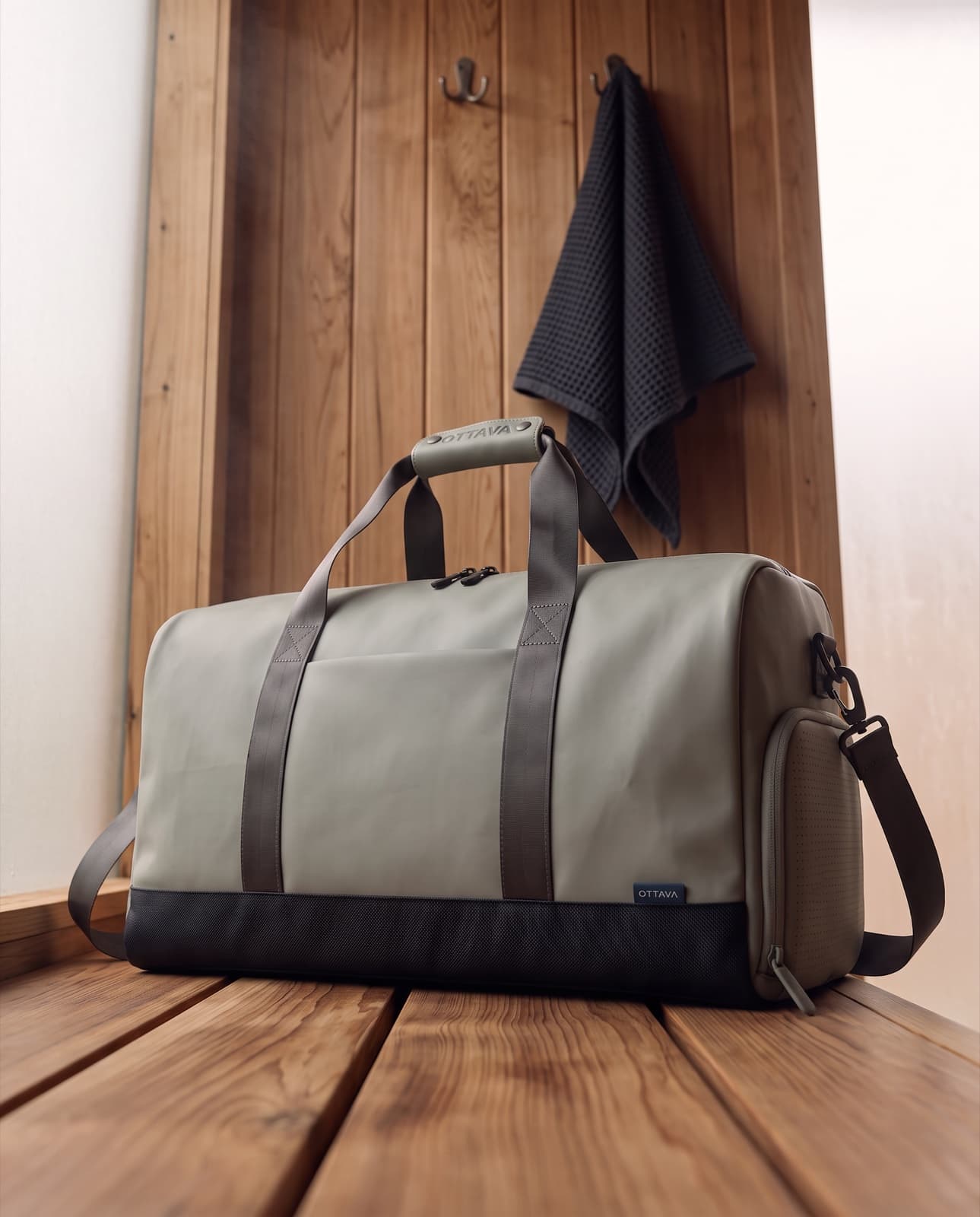
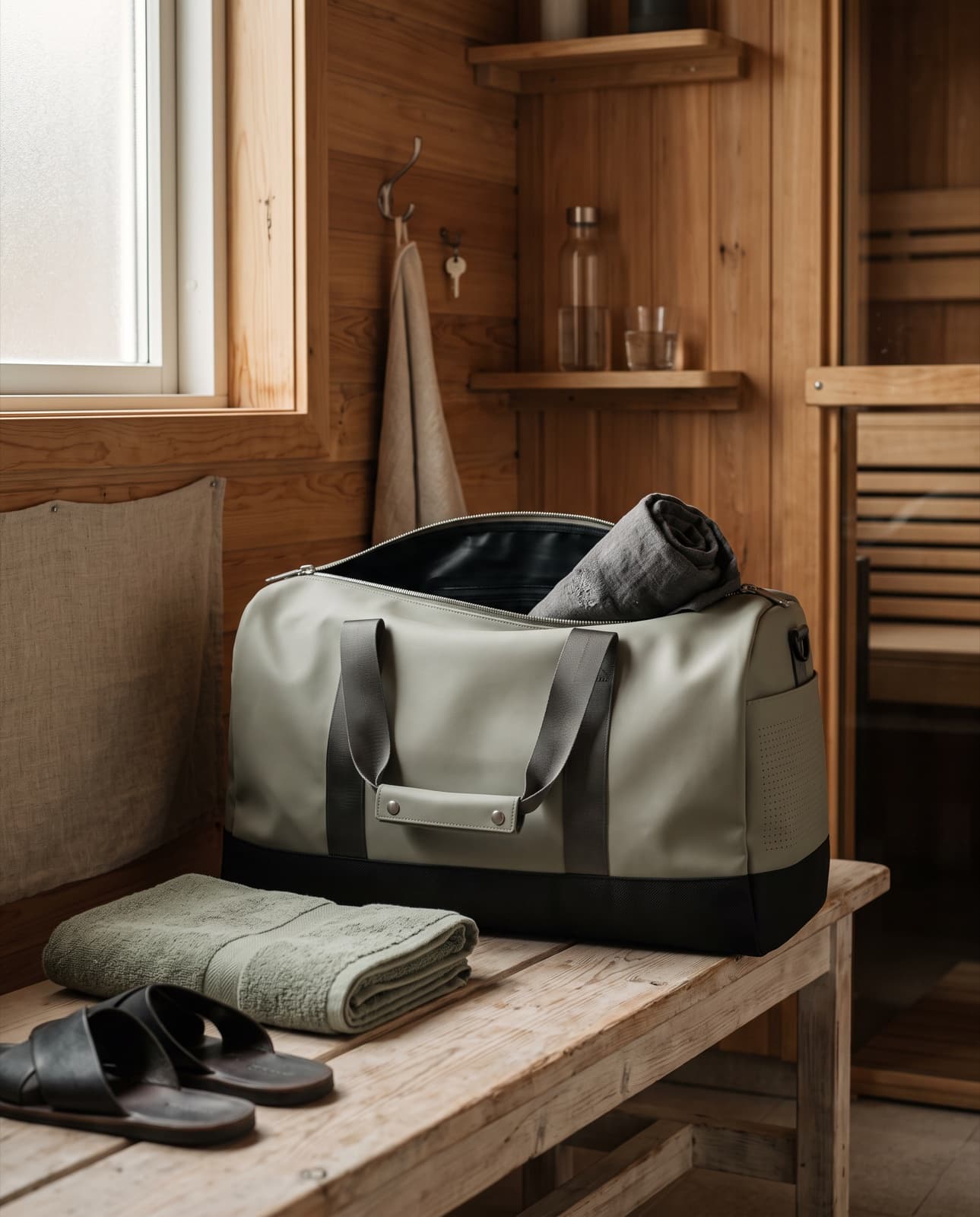
Out of stock · November drop
Every run is small, numbered, and allocated from the list.
Every unit is made to order in a numbered run of 150. Allocation is offered to the list in order. When yours comes up we send a secure link, you pay in full, and your unit enters the run. Ships November 2026. Cancel for a full refund any time before the batch enters production.