Racing in heat and humidity: what changes, and what the research says about preparing
At 86 per cent humidity, sweat stops being cooling and becomes cost. What that does to pacing, and how much of it you can train away before you fly.
OTTAVA Editorial · Published 24 August 2026 · 6 min read
Most endurance advice about heat was written for dry heat. A 35°C afternoon in Madrid and a 31°C morning in Singapore are not the same physiological problem, and the difference is not the thermometer.
At 86 per cent relative humidity — Singapore's November average — the air is close to saturated. Sweat still leaves your skin, but it evaporates far more slowly, and evaporation is the only meaningful way a running body sheds heat. You keep producing sweat, you keep losing fluid and sodium, and you get much less cooling in return. That is why humid races feel disproportionately hard at paces that are objectively modest.
This piece is about what to do with that, particularly for a hybrid race in a hot, humid city.
What humidity actually does to the effort
Three things happen, and they compound.
Skin blood flow rises. To dump heat you send more blood to the surface. That blood is not available to working muscle, so at any given pace your heart rate is higher and your stroke volume lower — the phenomenon usually called cardiac drift. The pace has not changed; the cost of the pace has.
Core temperature climbs earlier. With evaporative cooling limited, heat production outruns heat loss sooner. Performance in the heat is well described as being limited by the rate of rise in core temperature rather than by any single threshold.
Perceived effort decouples from pace. This is the part that ruins races. Your fourth kilometre feels like your seventh. Athletes who pace on feel go out at a pace that felt right in a temperate hall and pay for it at station six.
Add the indoor-hall specifics of a HYROX venue: several thousand bodies, limited air movement across the running lanes, and an air-conditioning system that was never designed for the heat load of a race. The set temperature on the wall is not the temperature you race in.
Pacing a hybrid race in humidity
The running is where humidity is expressed, but the stations are where the race is lost.
Go out slower than your temperate-race target. A conservative rule that survives contact with reality: take your goal run pace and add several seconds per kilometre for the first three runs. You can spend what you saved from run five onwards. Nobody has ever regretted the first kilometre being too slow.
Expect the compression stations to hurt earlier. The sled push and pull are largely unaffected by heat — they are short, and they are limited by force and friction rather than by cooling. Wall balls are the opposite. One hundred reps, at the end, in a hot hall, with a heart rate that never came down, is where a heat-naive pacing plan produces a very long station.
Treat grip as a heat variable. Wet hands fail on the sled pull rope and on kettlebell handles well before your forearms do. Event chalk is available at the sled pull and the farmers carry, and gloves are permitted equipment; your own chalk is not, and using it is a two-minute penalty.
Do not improvise cooling on course. The rulebook is explicit: aid-station fluid is for drinking, and pouring it over your head is a two-minute penalty because of the slip hazard it creates. Cool before the start, not during.
Before the start
Pre-cool if you can do it cleanly. Cold fluid or an ice slurry in the 20 to 30 minutes before the start lowers the temperature you begin from, which buys time before the rate of core-temperature rise starts costing you. It is simple, cheap and has the useful property of also being hydration.
Warm up shorter. The warm-up's job is to raise muscle temperature and rehearse movement. In a hot hall, part of that job is already done for you. A long warm-up in humidity spends the thing you are trying to conserve.
Get the sodium right, and do it early. In a saturated environment you will sweat more and lose more sodium than your training benchmarks predict. Whatever you use, it needs to be in you before the start, because during the race you may only consume what you carried from the start or what the aid stations provide.
Wear less, and wear what you have already sweated in. Light, minimal, and previously tested. A new fabric against skin that will be soaked for an hour is a decision made on the worst possible day.
Heat acclimation: what the research supports
If you live in a temperate city and you are racing in Singapore, Hong Kong or Bangkok, you can arrive partly adapted. The adaptation is real, it is measurable, and it is one of the better-evidenced interventions in endurance sport.
A 2025 quantitative review in Comprehensive Physiology pooled 211 papers on exercise heat acclimation using Bayesian meta-regressions. Across the literature, heat acclimation expanded plasma volume by 5.6 per cent (credible interval 3.8 to 7.0), lowered resting heart rate by about 5 beats per minute and end-exercise heart rate by about 17, reduced resting core temperature by 0.19°C and end-exercise core temperature by 0.43°C, increased whole-body sweat rate, and improved time-trial performance by about 3.1 per cent with time to exhaustion up by roughly 49 per cent.
The protocols behind those numbers averaged 8 exposures of about 90 minutes at around 39°C. The dose-response findings are the useful part: each additional exposure added to haemoglobin mass and sweat rate, and each additional 15 minutes per session added roughly 0.4 per cent more plasma volume.
Two honest caveats.
That is exercise heat acclimation, not sitting in a sauna. The bulk of that evidence comes from protocols where people trained in the heat. Passive heat exposure after training is a related but weaker literature; a 2025 systematic review of post-exercise passive heat found small to moderate physiological signals with low to very low certainty on performance. It is worth doing, but do not confuse the two evidence bases. There is more on dosing that side of it in our piece on sauna protocols for athletes.
Adaptations decay. Heat acclimation is not a bank you fill in March for a November race. It fades over weeks without re-exposure, which is why the block should finish close to the event rather than well before it.
A practical block for a temperate-based racer
Nothing exotic. Roughly two to three weeks, finishing within the last week before travel.
- Eight to ten sessions. That is the number the literature converges on for most of the available adaptation.
- Sixty to ninety minutes of heat per session, of which the exercise portion can be modest. Easy aerobic work in the heat is the point; hard intervals in the heat are a different, more costly stimulus.
- Overdress rather than overheat the room if you do not have access to a hot environment. Extra layers on an easy run achieves much of the same thing, badly but cheaply.
- Keep the hard sessions cool. Do not stack a heat block on top of your highest-quality work. Something will give, and it will be the quality.
- Sleep and hydration are the limiter. If either is degrading, you have the dose wrong.
If you already live in Singapore, Hong Kong, Jakarta or Bangkok, you can skip all of this. You are acclimated, permanently, and it is one of the few genuine advantages of training in that climate. The correct move for a local racer is the opposite: do not assume a European race will feel easier, because your cooling system is calibrated for air that will not be there.
After the finish
You will be soaked, and the hall is air-conditioned. The temperature gradient between a wet body and a 22°C hall is much larger than it feels while you are still moving. Dry kit within a few minutes of finishing is the single most effective thing in the bag, and the reason we are pedantic about separating wet from dry.
Whether to plunge afterwards is a real question with a real trade-off rather than a default yes — see what the evidence supports about ice baths.
And if the race is Singapore, the full weekend guide covers the venue, the travel and the four weeks before.
Common questions
- Why is humidity harder than heat?
- Evaporation is the body's main cooling route when running. In near-saturated air, sweat evaporates far more slowly, so you keep losing fluid and sodium while getting much less cooling in return. Skin blood flow rises, heart rate drifts upward at the same pace, and core temperature climbs earlier.
- How many heat sessions do I need to acclimate?
- The protocols in the literature average about eight exposures of roughly 90 minutes at around 39°C, and dose-response analysis shows each extra exposure and each extra 15 minutes adds a little more adaptation. Eight to ten sessions across two to three weeks, finishing close to the race, captures most of the available benefit.
- Does heat acclimation improve performance?
- A 2025 Bayesian meta-regression across 211 papers found plasma volume expanded by 5.6 per cent, end-exercise heart rate fell by about 17 beats per minute, end-exercise core temperature fell by 0.43°C, and time-trial performance improved by about 3.1 per cent. Those figures come from exercise-in-the-heat protocols, not from passive sauna use.
- How much slower should I pace in humidity?
- Go out deliberately slower than your temperate-race target for the first third of the race and spend the saving late. Perceived effort decouples from pace in humidity, so pacing on feel systematically starts too fast.
Sources
- Influence of Exercise Heat Acclimation Protocol Characteristics on Adaptation Kinetics: A Quantitative Review With Bayesian Meta-Regressions — McDonald et al., Comprehensive Physiology, 2025
Source of every heat-acclimation effect size quoted, and of the dose-response figures.
- Heat Acclimation Decay and Re-Induction: A Systematic Review and Meta-Analysis — Sports Medicine
Basis for the statement that adaptations decay without re-exposure.
- HYROX Rulebook, Singles, season 2026/27 — HYROX
Chalk, permitted equipment, hydration and active-cooling penalties.
- Singapore climate averages for November — Weather Atlas
Humidity and temperature figures used in the opening.
Written and checked against the sources above on 24 August 2026. If something here is wrong or has gone out of date, tell us and we will correct it — see our editorial standards.
Read next
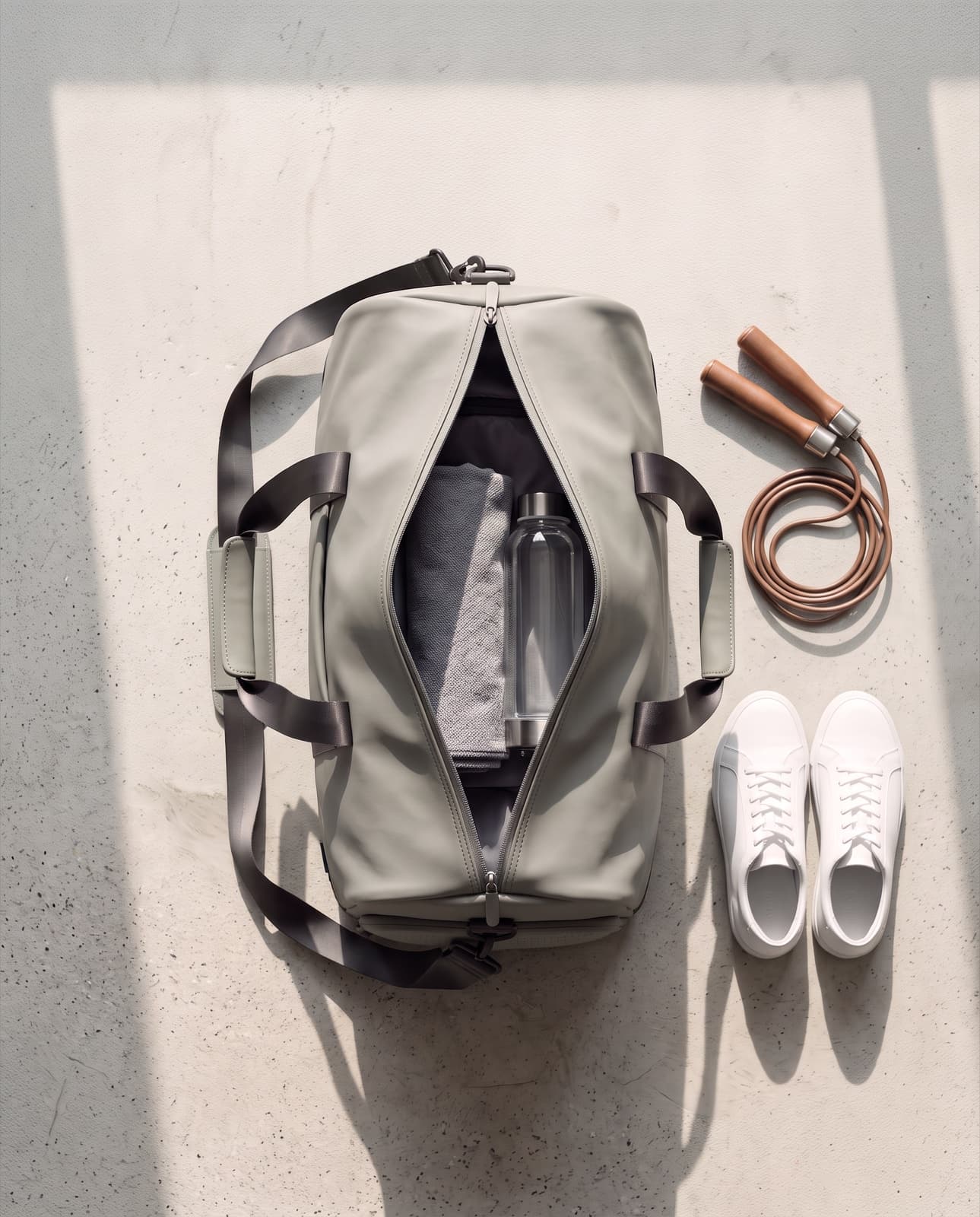
Out of stock · November drop
Every run is small, numbered, and allocated from the list.
Every unit is made to order in a numbered run of 150. Allocation is offered to the list in order. When yours comes up we send a secure link, you pay in full, and your unit enters the run. Ships November 2026. Cancel for a full refund any time before the batch enters production.