Sauna for athletes: what the evidence supports, and a protocol that follows from it
The epidemiology is stronger than people think and the performance data is weaker. A protocol built on what the research can actually carry.
OTTAVA Editorial · Published 24 August 2026 · 5 min read
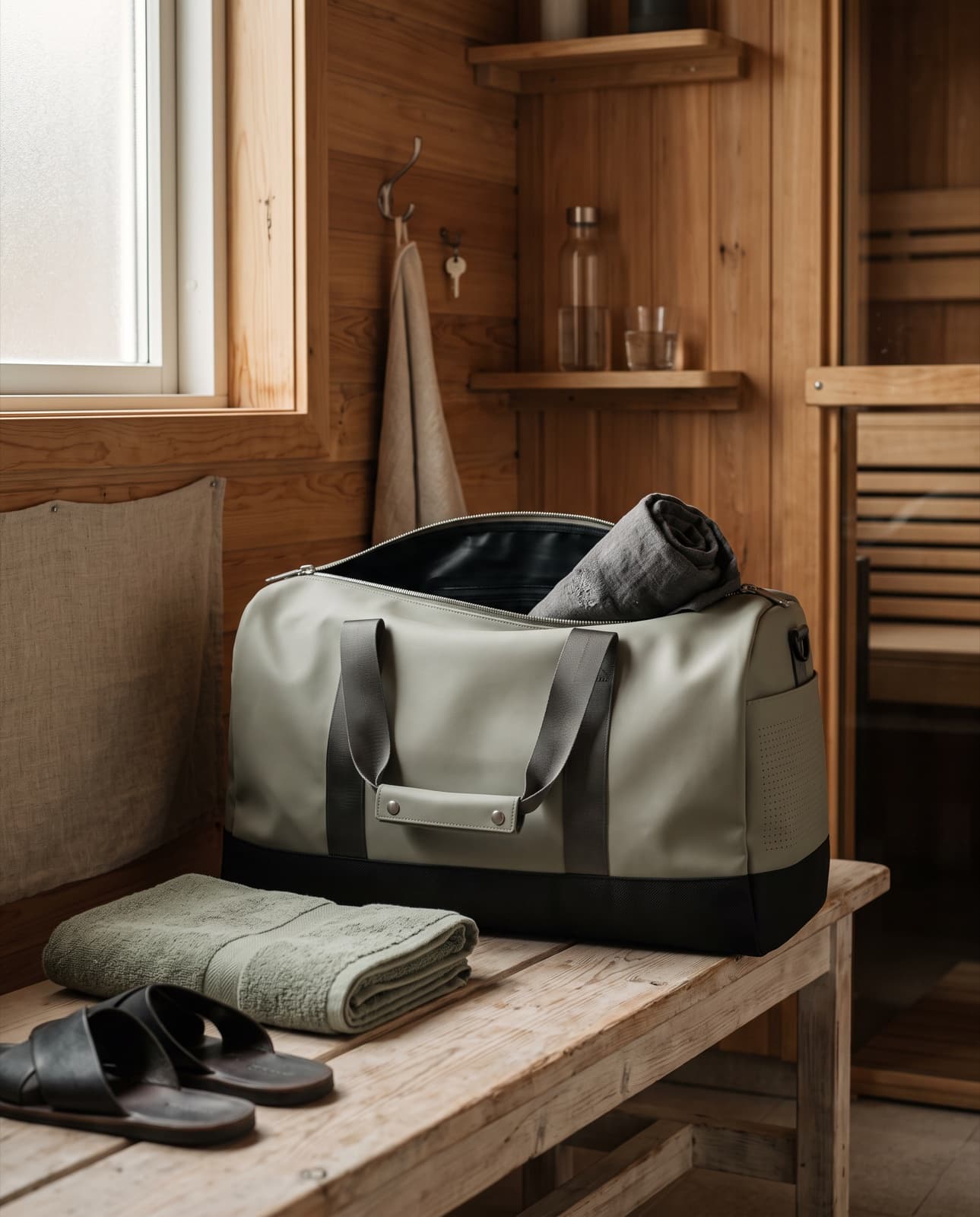
The sauna has a stranger evidence base than the ice bath. The epidemiology is unusually strong and the athletic performance data is unusually thin, and most articles about it manage to get those two facts the wrong way round.
Here is the honest state of it, and a protocol that follows from it.
Heat as a training stimulus
Repeated heat exposure produces adaptations that overlap with endurance training: plasma volume expands, sweat rate rises and starts earlier, resting and exercising heart rate fall, and core temperature at a given workload comes down.
The best current quantification is a 2025 quantitative review in Comprehensive Physiology, which used Bayesian meta-regressions across 211 papers on exercise heat acclimation. Pooled across the literature: plasma volume up 5.6 per cent, resting heart rate down about 5 beats per minute, end-exercise heart rate down about 17, resting core temperature down 0.19°C, end-exercise core temperature down 0.43°C, time-trial performance up about 3.1 per cent.
The protocols producing those numbers averaged 8 exposures of roughly 90 minutes at about 39°C — and, crucially, they were exercise heat acclimation. People trained in the heat. That is a much larger stimulus than sitting still in a hot room afterwards.
What sitting in a sauna after training does
The study everyone cites is Scoon and colleagues, published in the Journal of Science and Medicine in Sport in 2007. Six competitive male runners added post-exercise sauna bathing over three weeks. Run time to exhaustion increased 32 per cent relative to control, which the authors estimated as roughly a 1.9 per cent improvement in an endurance time trial.
A 1.9 per cent improvement is enormous in endurance terms. Six runners is a very small study. Both of those things are true, and the second is why the finding has never been as settled as its citation count suggests. A 2025 systematic review of passive post-exercise heat found small to moderate physiological signals with low to very low certainty on performance outcomes.
The reasonable position: post-exercise sauna plausibly drives some of the same plasma-volume adaptation as training in the heat, at a lower dose and a much lower cost to your training load. It is worth doing if you are racing somewhere hot. It is not worth reorganising your week around.
If the race is in Singapore, Hong Kong or Bangkok, the more complete version of this argument is in racing in heat and humidity.
The cardiovascular evidence, and its asterisk
The long-run health data comes from the Kuopio Ischaemic Heart Disease cohort in eastern Finland. Laukkanen and colleagues followed 2,315 middle-aged men for a median of about 21 years. Compared with men who used a sauna once a week, men using it four to seven times a week had a hazard ratio for sudden cardiac death of 0.37 (95 per cent CI 0.18 to 0.75), with similar direction of effect for fatal cardiovascular events and all-cause mortality.
That is a striking association, and it has been replicated in direction across several analyses of the same cohort and others.
The asterisk is worth stating plainly, because almost nobody selling a sauna does: this is observational. JAMA Internal Medicine published a commentary at the time under the title "The Link Between Sauna Bathing and Mortality May Be Noncausal." Men who take four to seven saunas a week in Finland may differ from men who take one in ways that are hard to fully adjust for — leisure time, income, health status, the simple fact that being well enough to sit in a hot room four times a week is itself a health signal.
Frequent sauna use is probably good for you. The size of the effect in that cohort is probably larger than the truth.
A protocol that follows from the evidence
Traditional Finnish sauna, 80 to 100°C, low humidity. This is what the epidemiology studied. Infrared cabins run far cooler by air temperature and are a different exposure; they may be fine, but do not assume the Finnish numbers transfer.
Fifteen to twenty minutes per round, two to three rounds. Longer single sits are not obviously better and get progressively less pleasant.
After training, not before. Heat before a session degrades the session. Heat after it is the version with the plausible adaptation story.
Four or more sessions a week if health is the goal. That is the frequency band the mortality association sits in. For heat acclimation before a hot race, the useful shape is closer to a block: most sessions concentrated in the two to three weeks before you travel, because the adaptation decays.
Rehydrate deliberately. You will lose meaningful fluid and sodium. A sauna that leaves you underhydrated for tomorrow's session has cost more than it returned.
Skip it if you are already deep in fatigue. Heat is a stressor. It adds to the pile.
Sauna and lifting
There is an emerging literature on post-resistance-training heat as a way of supporting muscular adaptation, which sits in interesting opposition to the cold-water finding that immersion immediately after lifting modestly blunts hypertrophy. Sport Sciences for Health published a systematic review with meta-analysis on post-resistance-training heat therapy in 2026.
The reason we are not quoting an effect size is that the field is young and the protocols vary enormously — local heat wraps, hot water immersion and whole-body sauna are not the same intervention. The pragmatic reading is simply that heat after lifting is unlikely to hurt your adaptation the way cold appears to, so if you are choosing one on a hypertrophy day, choose the hot room.
The cold side of that comparison is set out in the ice bath piece.
When not to
- After drinking. The combination of alcohol, vasodilation and heat is the classic Finnish accident. Do not.
- If you are pregnant, or have a cardiac condition, uncontrolled blood pressure or are on medication that affects thermoregulation. Take advice first.
- The night before a race. Heat late in the evening degrades sleep for many people, and dehydration is the last thing you want on the start line. Finish your heat block earlier in race week.
- To make weight. Sweating out fluid to hit a number is a different practice with a different risk profile, and it has nothing to do with anything above.
What to bring
Two towels, not one: one to sit on, one that stays dry for afterwards. Slides. Water. Something to change into that is not the kit you sweated in.
That last point sounds trivial. It is the entire difference between a recovery session and carrying a bag of damp clothing around for the rest of the day — see why gym bags start to smell for the unglamorous mechanics of it.
If your venue offers a plunge alongside the sauna, the order matters and the answer depends on what you did that day: sauna or ice first.
Common questions
- How long should an athlete sit in a sauna?
- Fifteen to twenty minutes per round, two to three rounds, in a traditional Finnish sauna at 80 to 100°C. Take it after training rather than before, and rehydrate deliberately afterwards.
- Does the sauna improve endurance performance?
- Possibly, modestly. The most-cited study followed just six competitive male runners over three weeks of post-exercise sauna and found a 32 per cent increase in run time to exhaustion, equivalent to about 1.9 per cent in a time trial. A 2025 systematic review of passive post-exercise heat rated the certainty of performance effects as low to very low.
- How often should I use a sauna?
- The Finnish cohort association with lower sudden cardiac death sits at four to seven sessions a week versus one. For heat acclimation before a hot race, concentrate sessions into the two to three weeks before you travel, since the adaptation decays.
- Is the sauna better than an ice bath after lifting?
- On current evidence, probably yes if hypertrophy is the goal. Cold immersion immediately after resistance training appears to blunt adaptation modestly; heat does not appear to carry the same cost, though that literature is younger and the protocols vary.
- Is infrared the same as a Finnish sauna?
- No. Infrared cabins run at much lower air temperatures and deliver heat differently. The mortality and heat-acclimation evidence comes from traditional saunas, so do not assume those findings transfer.
Sources
- Influence of Exercise Heat Acclimation Protocol Characteristics on Adaptation Kinetics: A Quantitative Review With Bayesian Meta-Regressions — McDonald et al., Comprehensive Physiology, 2025
Heat acclimation effect sizes and protocol characteristics.
- Effect of post-exercise sauna bathing on the endurance performance of competitive male runners — Scoon et al., Journal of Science and Medicine in Sport, 2007
The six-runner study behind the 32 per cent time-to-exhaustion figure.
- Association Between Sauna Bathing and Fatal Cardiovascular and All-Cause Mortality Events — Laukkanen et al., JAMA Internal Medicine, 2015
The Kuopio cohort finding, and the accompanying commentary on possible non-causality.
- Feeling the heat: a systematic review with meta-analysis on the effects of post-resistance training heat therapy on muscular adaptations — Sport Sciences for Health, 2026
Cited only for the existence of the post-lifting heat literature; we have not quoted effect sizes from it.
Written and checked against the sources above on 24 August 2026. If something here is wrong or has gone out of date, tell us and we will correct it — see our editorial standards.
Read next
Out of stock · November drop
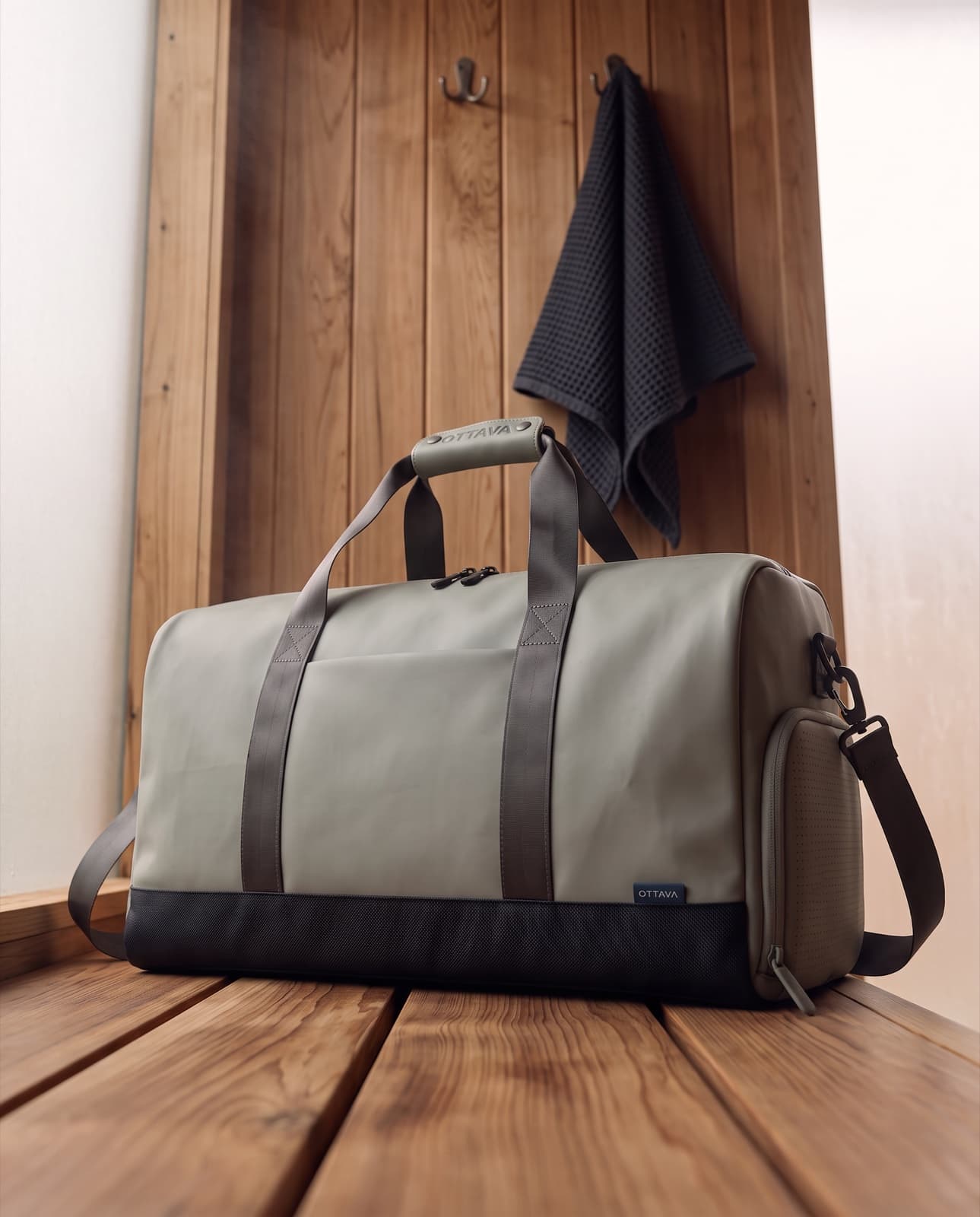
Every run is small, numbered, and allocated from the list.
Every unit is made to order in a numbered run of 150. Allocation is offered to the list in order. When yours comes up we send a secure link, you pay in full, and your unit enters the run. Ships November 2026. Cancel for a full refund any time before the batch enters production.