HYROX weights by division: every station, and what the step to Pro actually costs
Four divisions, three load bands. The full table from the current rulebook, and the two stations that decide whether you belong in Pro.
OTTAVA Editorial · Published 24 August 2026 · 6 min read
Every HYROX race is the same eight kilometres and the same eight stations in the same order. What changes between divisions is load — and less of it changes than most people assume.
The numbers below come from the HYROX singles rulebook for the 2026/27 season. Where this page and the rulebook disagree, the rulebook is right; it is republished by the organiser and it moves.
The full table
| Station | Distance or reps | Women | Men / Women Pro | Men Pro |
|---|---|---|---|---|
| SkiErg | 1,000 m | — | — | — |
| Sled push | 4 × 12.5 m | 102 kg (225 lb) | 152 kg (335 lb) | 202 kg (445 lb) |
| Sled pull | 4 × 12.5 m | 78 kg (172 lb) | 103 kg (227 lb) | 153 kg (337 lb) |
| Burpee broad jumps | 80 m | — | — | — |
| Rowing | 1,000 m | — | — | — |
| Farmers carry | 200 m | 2 × 16 kg (white) | 2 × 24 kg (grey) | 2 × 32 kg (black) |
| Sandbag lunges | 100 m | 10 kg (white) | 20 kg (grey) | 30 kg (black) |
| Wall balls | 100 reps | 4 kg to 2.70 m (white) | 6 kg — women to 2.70 m, men to 3.00 m (grey) | 9 kg to 3.00 m (black) |
Sled weights include the sled itself. That is not a footnote — it is the whole number. A 152 kg sled push is a sled plus plates totalling 152 kg, not 152 kg of plates.
Running is identical in every division: eight segments of roughly 1,000 m, 8,000 m in total, with the roxzone transitions on top.
There are four divisions but only three load bands
This is the most useful thing on the page, and it falls straight out of how the rulebook prints its own table.
The columns are Women, then Men and Women Pro together, then Men Pro. A woman moving from Open to Pro takes on exactly the load an Open man carries. A man moving from Open to Pro takes on a step of a different size again.
For a woman, the Open-to-Pro step is: sled push +50 kg, sled pull +25 kg, farmers carry +8 kg per hand, sandbag +10 kg, wall ball +2 kg, and the target rises from 2.70 m to 3.00 m. In proportional terms the wall ball is the brutal one — a 50 per cent load increase and a 30 cm higher target, across 100 reps, at the end of the race.
For a man, the Open-to-Pro step is: sled push +50 kg, sled pull +50 kg, farmers carry +8 kg per hand, sandbag +10 kg, wall ball +3 kg with the target unchanged. The sled pull is the one that separates people. Going from 103 kg to 153 kg is a 49 per cent increase on a movement where technique masks a lot less than it does on the push.
The practical version: if you are an Open woman who wants to know what Pro feels like, train the Open men's loads. There is no guesswork. If you are an Open man, the honest test for Pro is a 153 kg sled pull and 100 wall balls at 9 kg, not the running.
Colours matter more than numbers on the day
Kettlebells, sandbags and wall balls are colour-coded: white, grey, black. You select your own equipment at those stations, and you do it while your heart rate is somewhere near threshold and the hall is loud.
The penalty for getting it wrong is not a fifteen-second slap. If you complete all or part of the farmers carry or the sandbag lunges with the wrong weight, you must repeat the entire station with the correct weight. Failure to do so is a disqualification.
So learn your colour, not your number. White for Open women. Grey for Open men and Pro women. Black for Pro men.
The two settings nobody checks
Both ergs come preset, and both presets are adjustable.
The SkiErg is set to resistance 6 for all divisions. The rower is set to damper 6, with the footplate at position 4. You may change either as many times as you like, and you should know before race morning which setting you actually want, because the twenty seconds you spend fiddling with a damper is twenty seconds.
Set your training ergs to the race presets and leave them there for the last block before an event. It removes a variable.
What the penalties actually are
Most stations use the same escalating structure: first infringement is a formal warning, second is 15 seconds, and every one after that is another 15 seconds with no further warnings.
Some penalties sit outside that ladder:
- Equipment not returned properly — kettlebells not upright in the box, sandbag not in its marked area — is 30 seconds. Crucially, if you go back and fix it before you leave the roxzone, it is not applied.
- Wrong weight on the farmers carry or the lunges means repeating the whole station, or a DQ.
- Wall balls have no warnings. It is a rep or a no-rep. Hips below knees, standing tall to start, both hands, the correct target's strike zone, and you may not catch the ball off a bounce and continue.
- Chalk is two minutes if you use your own, remove event chalk from a station, or use powdered chalk at the wall balls. Event chalk exists at the sled pull and the farmers carry.
- Pouring water over yourself at an aid station is two minutes. The fluid is for drinking; wet floors are a hazard.
- Outside assistance — taking a drink or a gel from anyone other than an aid station — is two minutes per infringement.
- Incomplete station is a disqualification. All eight, in full, no exceptions.
The sled is the least predictable number on this page
The loads are fixed. The friction is not. Sled feel varies with the floor, the mat, the temperature of the hall and how many hundred people have already dragged plastic across it that morning, and racers routinely report large differences between venues at identical stated weights.
Two consequences. First, treat sled times from other people's races as weak evidence. Second, if you can, watch the sled lanes during an earlier wave at your own event. Ten minutes of watching tells you more about the day's push than a month of comparing splits online.
Doubles and relay
The station loads in doubles follow the same weight bands; what changes is that the work is shared, and the running is not. The doubles format has its own rulebook, and it is the one to read if that is your race. Relay splits the whole thing across four people.
If you are racing doubles, the training question is not "can I do this" but "can I do my half, twice, on a heart rate that never really comes down". That is a different session.
Where to check before you race
Weights, formats and rules change between seasons. Two things worth doing in the fortnight before an event: download the current singles or doubles rulebook, and read the station standards for the two stations you are least confident about. Most avoidable penalties come from a movement standard, not from fitness. If the race is a hot one, pacing and heat acclimation matter more than any weight on this page.
Our race-day packing list covers what the rulebook allows you to carry, and the full 2026/27 race calendar has every city and date for the season.
Common questions
- How heavy is the HYROX sled?
- The sled push is 102 kg for Women, 152 kg for Men and Women Pro, and 202 kg for Men Pro. The sled pull is 78 kg, 103 kg and 153 kg respectively. All figures include the weight of the sled itself.
- What is the difference between HYROX Open and Pro?
- The running and the reps are identical; only the loads change. A Women Pro racer carries exactly the Open men's weights. Men Pro adds 50 kg to both sleds, 8 kg per hand on the farmers carry, 10 kg on the sandbag and 3 kg on the wall ball.
- How many wall balls are there in HYROX, and how heavy?
- 100 reps in every division. Women use 4 kg to a 2.70 m target, Men and Women Pro use 6 kg — women to 2.70 m, men to 3.00 m — and Men Pro use 9 kg to 3.00 m.
- What happens if I use the wrong weight?
- On the farmers carry and the sandbag lunges, completing all or part of the station with the wrong weight means repeating the entire station with the correct weight. Not doing so is a disqualification. Equipment is colour-coded white, grey and black, so learn your colour rather than your number.
- What are the erg settings in a HYROX race?
- The SkiErg is preset to resistance 6 and the rower to damper 6 with the footplate at position 4, in all divisions. Racers may adjust both as often as they like during the race.
Sources
- HYROX Rulebook, Singles, season 2026/27 — HYROX
Primary source for every weight, distance, rep count, movement standard, erg preset and penalty on this page.
Written and checked against the sources above on 24 August 2026. If something here is wrong or has gone out of date, tell us and we will correct it — see our editorial standards.
Read next
Out of stock · November drop
Every run is small, numbered, and allocated from the list.
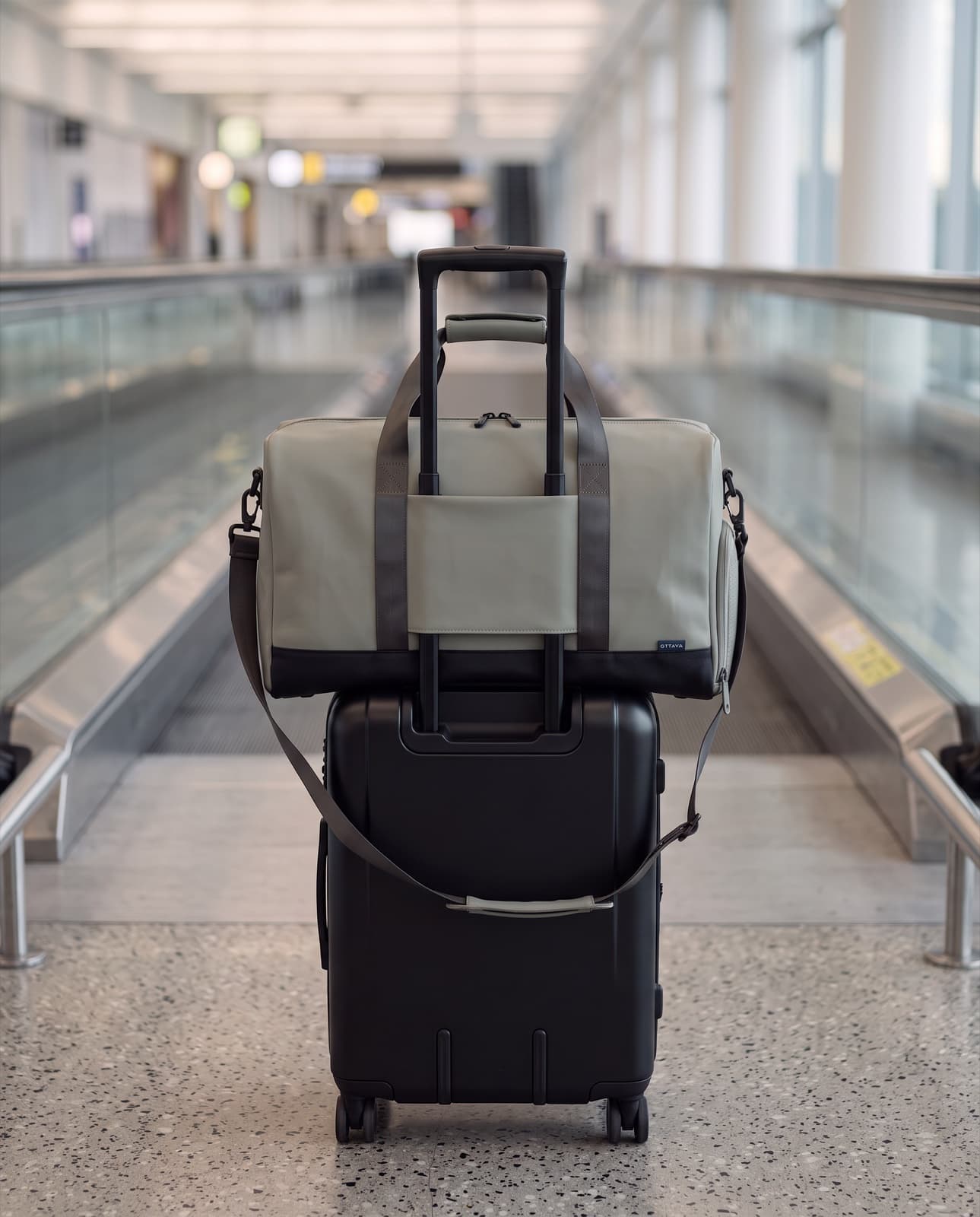
Every unit is made to order in a numbered run of 150. Allocation is offered to the list in order. When yours comes up we send a secure link, you pay in full, and your unit enters the run. Ships November 2026. Cancel for a full refund any time before the batch enters production.